
LiPo C-Rating Explained: How to Read Drone Battery Specs
Posted by Roman on 9th Oct 2026
LiPo C-Rating Explained: How to Read LiPo Battery Specs on Any Drone Pack
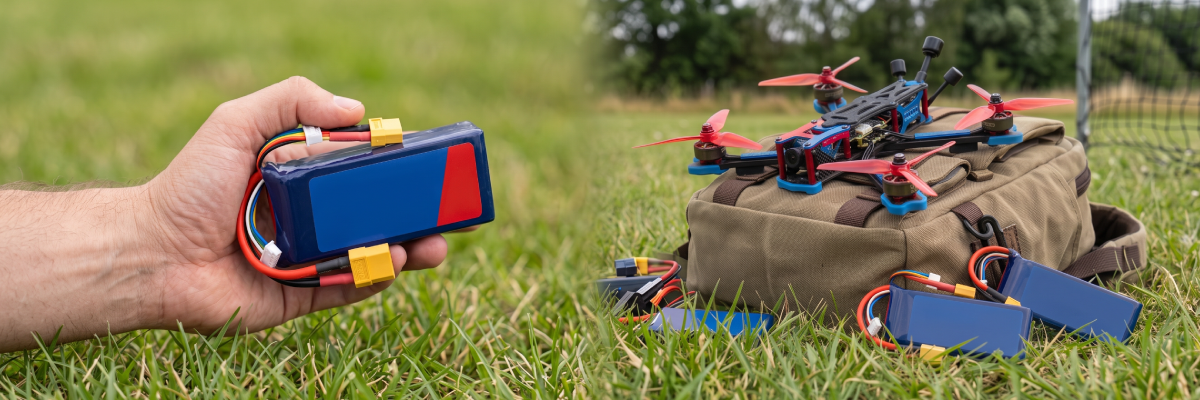
A LiPo wrap usually prints something like "6S1P 22.2V 1300mAh 120C XT60" — six characters that, between them, decide what the pack can actually do on a quad. By the end of this guide, you'll be able to look at any listing and know whether it suits your build. The C-rating gets the most attention of any of them, since it's the number buyers trust most and understand least — and that's where this article spends most of its time. It's written for anyone speccing packs for their own FPV drones.
What the Numbers on a LiPo Label Mean
Reading LiPo battery specs starts with breaking that string into its parts, one at a time. Take that same label — 6S1P 22.2V 1300mAh 120C XT60 — and break it down value by value.
|
Printed value |
What it means |
Why it matters |
|
6S |
Six cells wired in series |
Sets the voltage the ESC and motors see |
|
1P |
One cell per parallel group |
Common in LiPo; higher P values appear in Li-Ion packs |
|
22.2V |
Nominal voltage of the pack |
3.7V per cell, the figure used for naming |
|
1300mAh |
Capacity |
Roughly how long the pack lasts |
|
120C |
Claimed continuous discharge rate |
Claimed maximum current the pack can deliver |
|
XT60 |
Connector type |
Must match the build's connector |
A balance lead is also fitted alongside the main connector, allowing you to charge each cell individually rather than the pack as a whole. Pack weight is often printed or listed separately from these headline figures, and it matters just as much — two packs with an identical label can still fly very differently once one is 30 grams heavier than the other.
The S Number: What 4S and 6S Actually Mean
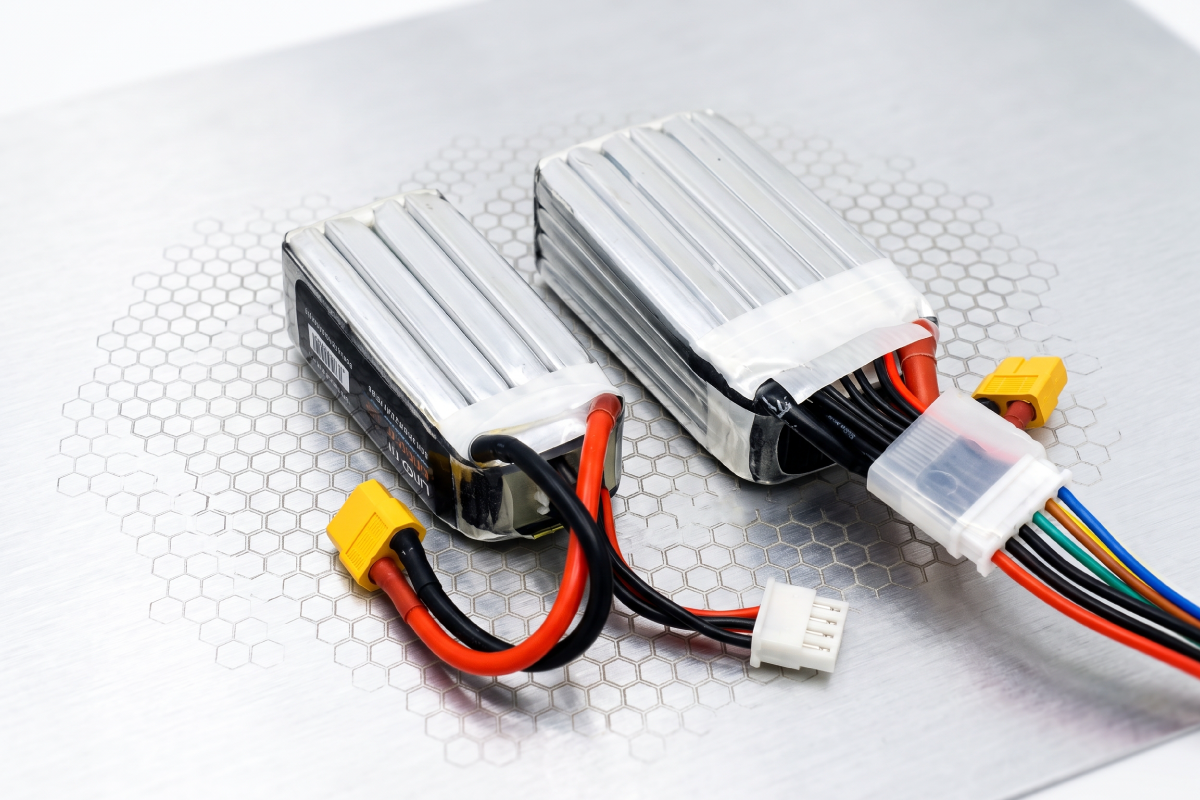
What does 4S mean on a drone battery, in practice? The S number is how many cells are wired in series, and each cell contributes 3.7V nominal — so 6S is six cells adding up to 22.2V. Higher voltage delivers the same power at lower current, which keeps the ESC and wiring cooler. That's why 6S became the default on 5-inch builds, while 4S remains common on smaller and cheaper setups. The 4S vs 6S FPV choice isn't really a matter of taste: a pack's cell count has to match the motor KV and the ESC's voltage rating, and a 6S pack dropped onto a build wired for 4S will destroy components immediately, not gradually.
|
Cell count |
Nominal voltage |
Fully charged |
Typical use |
|
1S |
3.7V |
4.2V |
Tiny whoops |
|
2S |
7.4V |
8.4V |
Small whoops, toothpicks |
|
4S |
14.8V |
16.8V |
3-inch to 5-inch builds |
|
6S |
22.2V |
25.2V |
5-inch and larger |
LiPo mAh Explained: Capacity, Flight Time and Weight
LiPo mAh explained simply: it's capacity, and it correlates with flight time without actually setting it — throttle use, all-up weight and motor efficiency feed into the result just as much. More capacity means more or bigger cells, which means more weight, and that extra weight eats into the extra capacity. Past a certain point, a bigger pack adds almost no flight time on an agile build, which is why 5-inch freestyle settled around 1300–1500mAh rather than climbing higher. Long-range builds break this rule on purpose, accepting the weight in exchange for endurance. The practical framing: pick capacity to match the flying style, not by reaching for the largest number on the shelf.
LiPo C-Rating Explained: What the Number Is Supposed to Tell You
The C-rating is a multiplier applied to capacity that gives the pack's claimed maximum continuous current. The calculation is simple:
- Convert capacity from mAh to Ah — a 1300mAh pack is 1.3Ah.
- Multiply that figure by the C-rating — 1.3 × 120C.
- The result is the claimed continuous current — 156A.
A second figure, the burst rating, usually appears alongside the continuous number and applies only for a few seconds at a time. This matters in practice because a 5-inch build can pull well over 100A during a hard punch-out, so the pack has to keep up, or voltage collapses mid-throttle. The honest way to read a LiPo C-rating: it describes what the manufacturer claims, not necessarily what the pack actually delivers under real load.
Why C-Ratings Are Overstated, and What to Check Instead
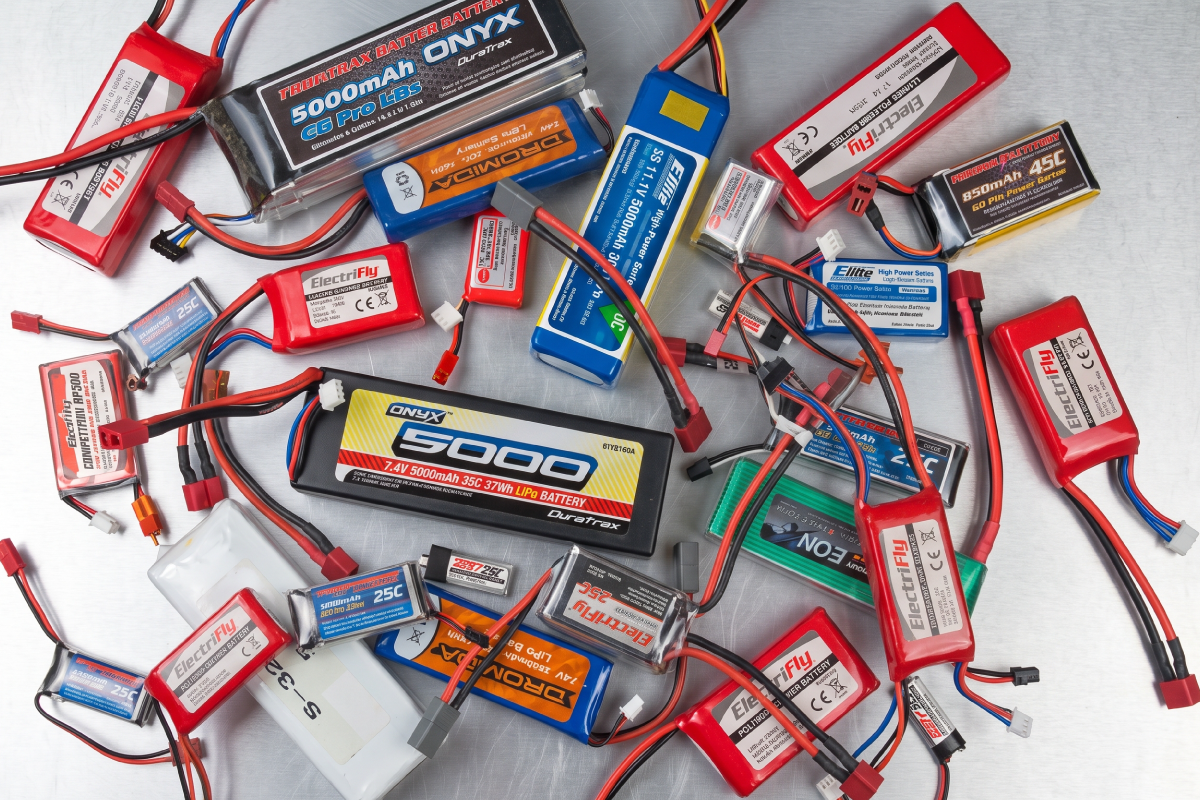
There's no independent standard forcing manufacturers to test C-ratings the same way, so the printed number is as much a marketing figure as a specification — which is exactly why this LiPo C-rating explained walkthrough is worth reading past the headline number. Real continuous output often sits at around half the advertised rating. The more useful measure is internal resistance, given in milliohms per cell, which most quality manufacturers publish alongside the headline numbers. Lower resistance means less voltage sag under load and less heat building up inside the pack. As a rough reference, a good 6S pack sits in the low single digits of milliohms per cell, and resistance climbs steadily as the pack ages. Compare internal resistance and pack weight between two packs before comparing their C-ratings, and treat a very high C-rating on a very cheap pack as a warning sign rather than a selling point.
Voltage Levels Every FPV Pilot Should Know
4.2V per cell is a full charge, and 3.7V per cell is the nominal figure used in naming a pack. 3.8V per cell is the storage voltage a pack should be left at when it won't be flown for a while. Under load, voltage drops and then recovers once the throttle is released, so the reading in the goggles is never the pack's resting voltage. Landing while there's still usable charge left keeps internal resistance low over the pack's life. A battery that puffs, sags noticeably more than it used to, or reads a much lower voltage than expected is telling the pilot something about its condition. For the charging side of all this — including how to hit that storage voltage safely — the current range of drone battery chargers is worth a look.
Weight, Watt-Hours and Connectors
Watt-hours are voltage multiplied by capacity in amp-hours, and they give a single figure for fairly comparing packs across different cell counts. Watt-hours are also the figure airlines use, which matters for anyone flying with batteries in checked or carry-on luggage. Pack weight decides how much of that added capacity the quad actually benefits from in the air. Connector type follows build size: XT60 connector on 4S and 6S builds, XT30 on smaller quads, and dedicated small connectors on 1S and 2S whoops. The balance lead itself is standard JST-XH across multi-cell packs. Browsing the drone store battery listings side by side is a fast way to compare watt-hours across brands before buying.
How to Choose a LiPo Battery for FPV: Matching Pack to Build
How to choose a LiPo battery for FPV comes down to matching pack specs to build type, rather than picking the biggest number on the shelf:
- 5-inch freestyle → 6S, around 1300–1500mAh, XT60, moderate C-rating with low internal resistance.
- 5-inch racing → 6S, lower capacity to save weight — low internal resistance is the priority here.
- Long-range 7-inch → higher capacity, with the extra weight accepted in exchange for endurance.
- 3-inch and toothpick → 4S, low capacity, XT30.
- Tiny whoop → 1S or 2S, small dedicated connector.
- Sub-250g build → capacity chosen so the whole build stays under the limit, since the pack is usually the single heaviest part.
Confirm the voltage rating on your flight controllers and ESC, and the connector already fitted to the build, before ordering — neither can be changed without soldering.
Frequently Asked Questions About LiPo C-Rating and Battery Specs
What does the C-rating on a LiPo mean?
It's a multiplier applied to capacity that gives the claimed maximum continuous current the pack can deliver. Multiply the capacity in amp-hours by the C-rating: a 1300mAh pack rated at 120C claims about 156A. The figure is a manufacturer claim with no independent standard behind it.
Is a higher C-rating always better?
No. Ratings are routinely overstated, and a high number on a cheap pack often means very little. Internal resistance in milliohms per cell is the more reliable indicator of how a pack performs under load.
What does 4S mean on a drone battery?
Four cells wired in series, giving 14.8V nominal and 16.8V fully charged. The S number sets the voltage the ESC and motors receive, so it must match how the build is wired.
What is the difference between 4S and 6S for FPV?
A 6S pack runs at higher voltage, so it produces the same power at lower current, which keeps the ESC and wiring cooler. Builds designed for 6S use lower-KV motors. The two aren't interchangeable without changing motors and checking the ESC rating.
Does more mAh mean longer flight time?
Usually, but with diminishing returns. Capacity adds weight, and beyond a point the quad spends the extra energy just carrying it. Flying style and quad weight affect flight time as much as capacity does.
What connector do FPV drone batteries use?
XT60 is standard on 4S and 6S builds, XT30 on smaller quads, and small dedicated connectors on 1S and 2S whoops. The pack's connector has to match what's already fitted to the quad.