
How to Safely Recharge FPV and Camera Drone Power Packs
Posted by Roman on 4th Aug 2026
Powering up a drone is not always as simple as plugging in a cable and waiting. Different models use different systems, from smart batteries to external balance chargers and multi-slot hubs. That’s why understanding how to charge drone batteries matters for both safety and performance. In this guide, you’ll learn how charging a drone battery really works, how long it takes, and what to consider whether you’re at home or out in the field.
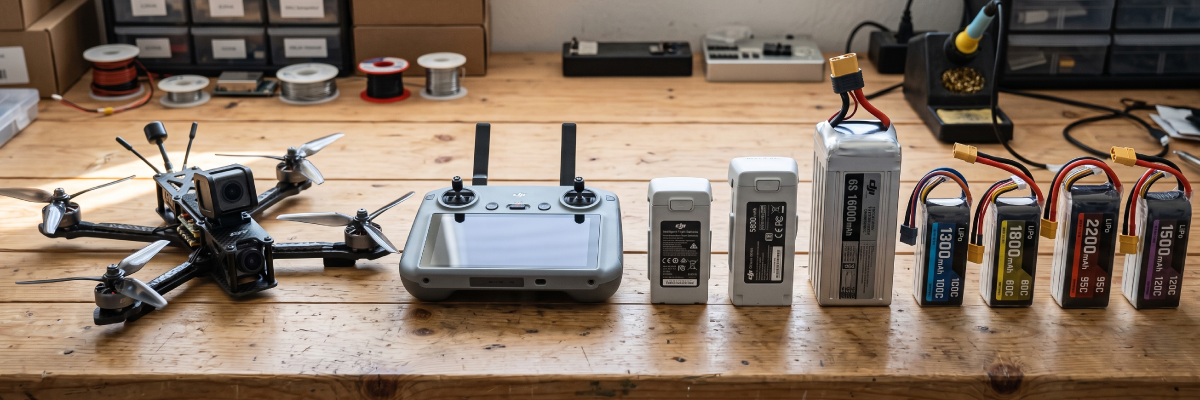
Basic Recharging Process
If you’re wondering how to charge a drone battery, the process is straightforward but varies by model. A few simple steps help avoid damage and extend power pack lifespan:
- Identify the power pack type;
- Use the correct energy reserve or official hub;
- Connect everything through the proper port and cable;
- Place the unit on a stable, non-flammable surface;
- Monitor the charging indicator;
- Disconnect once the cycle is complete.
The safest option is always the manufacturer-approved charger. It matches the right voltage, wattage, and charging profile, which protects overall battery health and reduces risks like overcharging.
Common Recharging Methods for UAV Systems
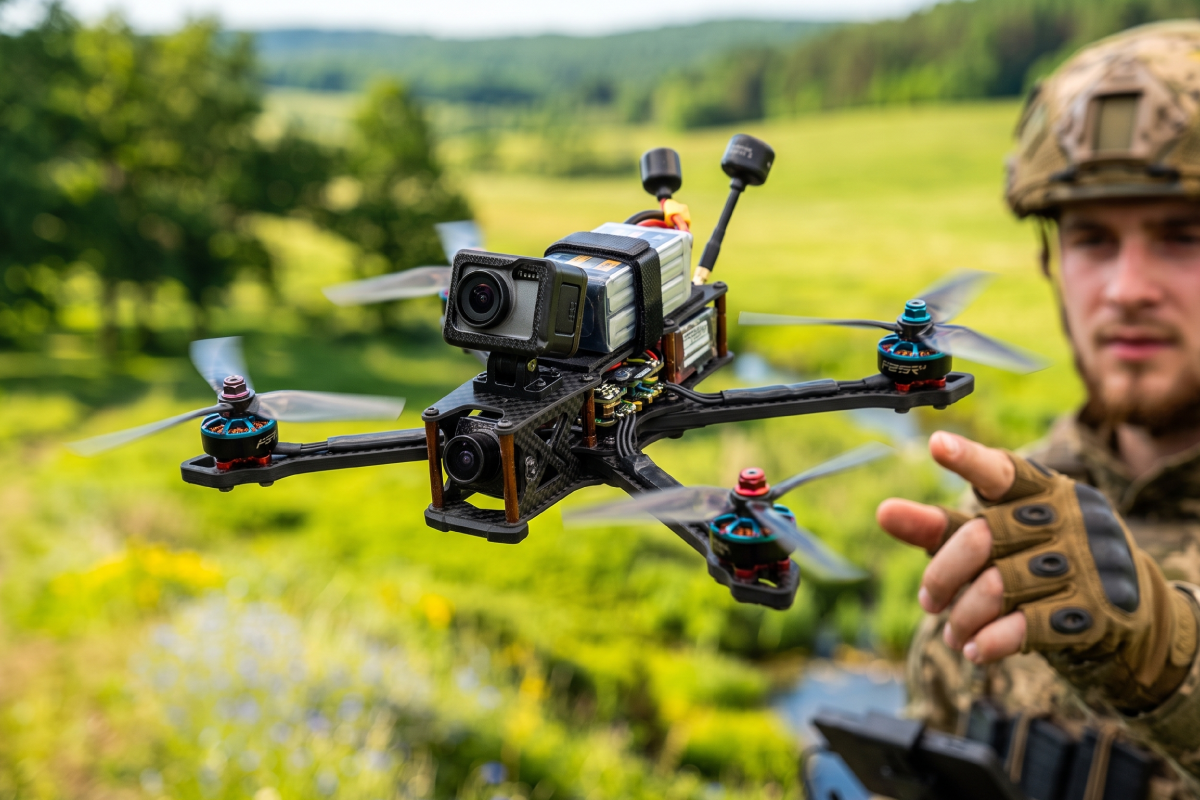
There isn’t a single method for charging drone batteries, and the right approach depends on your drone type and how its flight power pack is designed. Some models allow direct powering up via a built-in power port, while others require the battery to remain inside the drone during powering up. Many camera drones rely on a charging hub or dock, which can top up several spare batteries in sequence, making it easier to manage multiple flights.
For hobby and FPV setups, the process is different. These often use an external balance charger, especially with LiPo packs, where controlling individual cell voltage is important. If you travel often, a portable power station or a drone battery-charging station can support powering up in the field. This flexibility is helpful, but it also highlights one key idea: charging a drone battery is not a one-size-fits-all process.
Using USB-C and Direct Power Input
Many users search for how to charge a drone battery with a USB cable, but this option depends on the power pack design. Some modern smart battery systems support USB-C cable, either directly or through a dedicated power cable.
At the same time, many drones can only be topped up through a charging hub or while the power pack is inside the drone. This is common for camera drones with built-in battery management systems.
FPV setups and removable LiPo power pack packs usually do not support USB charging. Before connecting anything, check the official method and power requirements. Safe operation always depends on correct voltage, supported input, and compatible hardware.
Typical Recharge Time
If you’re asking how long it takes to charge a drone battery, the answer depends on a few factors. power pack capacity (measured in mAh) and the wattage of your drone battery charger play a big role. Powering up one flight battery is usually faster than cycling through several with a hub.
Many smart battery systems slow down near a full charge to protect power pack health and extend battery cycle life. In general, small beginner drones may top up in under an hour, while camera drones often take 60-120 minutes. Larger setups or low-power topping up can take longer.
When a Charging Hub or Power Station Makes Sense
A drone battery charging station can mean different things. It may be a charging hub, a branded charging dock, or even a portable power station used for travel and field powering up. Some setups also include a charging case to keep everything organized.
For frequent flying, this setup makes life easier. It helps manage multiple spare batteries, keeps your workflow clean, and simplifies power pack rotation. While not essential for everyone, it’s a practical solution for creators, for long sessions, and for anyone who regularly uses multiple drone accessories.
Field Recharging Tips
Charging drone batteries in the field is common during travel or long flying sessions. A portable power station, car charger, or DC charger can keep your flight battery ready when you’re away from home. Many pilots also use a charging hub connected to an external power source for better control.
Outdoor setups require more attention. Always place batteries on a stable surface, away from heat, dust, and direct sunlight. Avoid powering up right after landing – let the power source temperature drop first. A stable power source is important, and it’s worth checking every power cable and input port before use. In these conditions, operational safety matters even more than at home.
Smart Batteries vs LiPo Packs: Why Charging Is Different
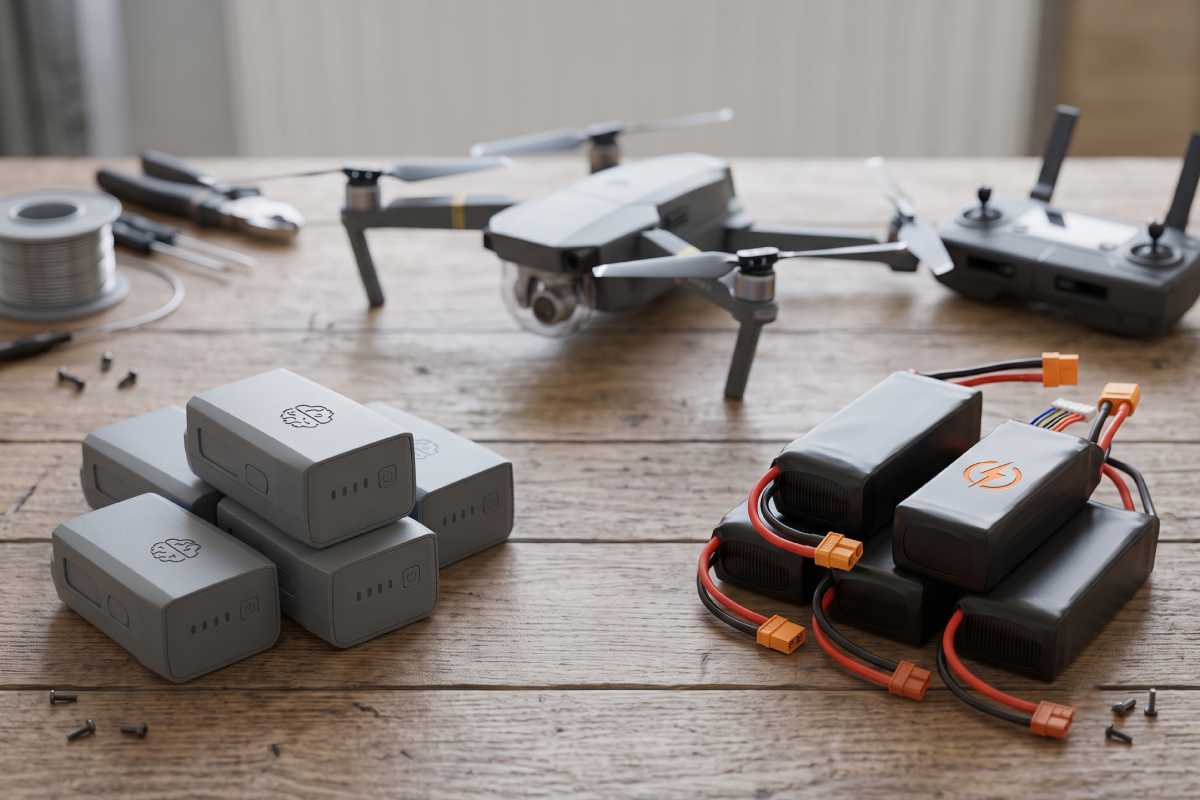
Not all drone batteries are built the same, and that directly affects how you top up them. Many camera drones use a smart battery with built-in systems that manage voltage, charging time, and overall power source health. In contrast, FPV and hobby drones often rely on a LiPo pack, which typically requires an external balancer to properly balance each cell. These packs don’t have the same safety features, and connectors can vary. That’s why beginners should always check their battery type before charging a drone battery, as the wrong method can damage the pack or shorten its power source lifespan.
Common Mistakes When Charging a Drone Battery
Mistakes during powering up drone batteries are more common than they seem, and some can seriously affect safety. Using the wrong battery chargers for drones or random adapters can lead to incorrect voltage and unstable charging. Other issues include powering up a damaged or swollen LiPo pack or plugging in a power source that is still hot after a flight. It’s also risky to leave batteries unattended for long periods or ignore the charging indicator. Keeping a battery at full charge for too long can shorten its cycle life, so careful handling always pays off.
Comparison Table: Common Drone Battery Charging Methods
Different drone power source charging methods suit different use cases and equipment setups.
|
Charging Method |
Best For |
Main Limitation |
|
USB / USB-C power input |
Small drones or supported smart batteries |
Not available on every battery |
|
Multi-battery hub |
Consumer camera drones with spare batteries |
Can be slower for multiple packs |
|
External balance charger |
FPV and hobby LiPo packs |
More setup knowledge required |
|
Portable power station |
Field charging and travel |
More equipment to carry |
|
Vehicle-powered charger |
Outdoor flying days |
Depends on vehicle power setup |
The best method depends on power source type, charger compatibility, and where you plan to fly. Each option balances convenience, speed, and safety differently for beginners and advanced users. USB and charging hubs prioritize convenience for everyday camera drones, while balance chargers are essential for LiPo packs used in FPV setups. Portable stations and car chargers are mainly used for field operations where access to mains power is limited or unavailable. Safety and compatibility remain the top priorities, especially when you plan to buy drones and choose the right powering up setup from the start.
Best Practices for Long-Term Power System Health
Following proper charging habits helps extend battery lifespan and improve flight safety.
- Let the battery cool before charging;
- Use the correct charger;
- Keep batteries on a stable, non-flammable surface;
- Monitor battery temperature;
- Store batteries properly between flights;
- Use spare batteries in rotation;
- Avoid forcing fast powering up if the system is not designed for it.
These practices support both safety and long-term battery performance.
Frequently Asked Questions (FAQ)
What is the correct way to recharge UAV power packs?
You typically top up a drone battery using the charger, hub, or cable designed specifically for your drone model. Smart batteries often connect directly to a dedicated charger, while LiPo packs may require a balance charger for safe cell-level charging.
Can I use USB-C for recharging?
Yes, but only if the drone is built to support USB or USB-C charging. Many small consumer drones allow it, while most FPV LiPo systems require dedicated external chargers.
How long does a full recharge usually take?
Powering up time depends on battery capacity and charger power. Small batteries may take around 30-60 minutes, while larger camera drone batteries may take up to 2 hours.
What is a multi-pack charging hub?
It’s a multi-battery charging solution, typically a hub, dock, or portable setup that allows users to top up multiple batteries more efficiently.
Can you charge drone batteries in the field?
Yes, many pilots use car chargers, portable power stations, or DC-compatible hubs to recharge batteries while traveling or flying outdoors.
Is it safe to charge a drone battery right after a flight?
It’s better to wait until the battery cools down. Powering up immediately after use can increase stress on the cells and reduce long-term battery health.
What is the safest way to charge drone batteries?
The safest method is always to use the manufacturer-recommended charger, place the battery on a stable, non-flammable surface, and monitor it during powering up.