
FPV Flight Controller Stack vs AIO Board: Which to Choose
Posted by Roman on 9th Oct 2026
AIO Flight Controller vs Flight Controller Stack: Which Fits Your FPV Build
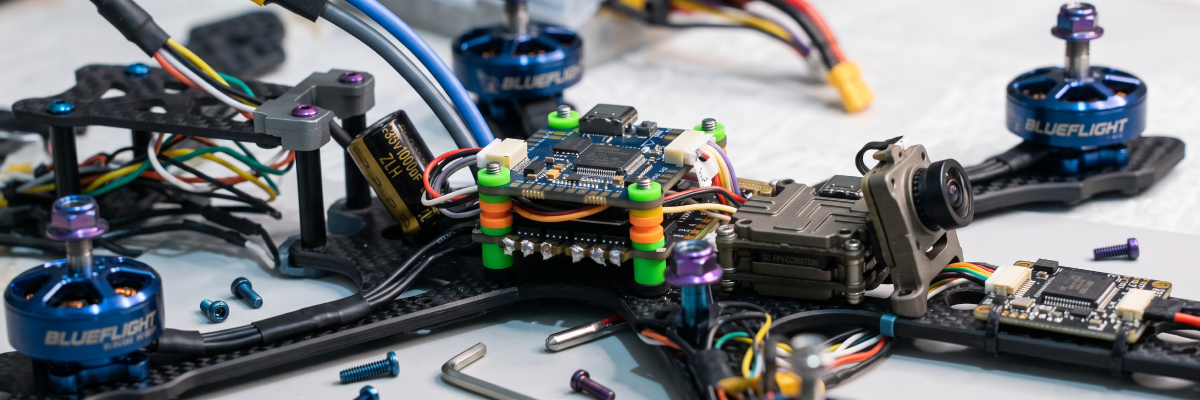
An FPV flight controller and its ESC can be bought two ways: as two boards bolted together, or as one combined board. Most pilots don't choose on preference — the frame decides first, and motor current draw does the rest. This guide covers what a flight controller stack is, how an AIO flight controller differs, what each format costs you the day it crashes, and which mounting pattern fits the frame in front of you. By the end, you'll know whether your build wants a stack, an all in one flight controller, or either.
Flight Controller Stack Explained: How the ESC and FC Work Together
A flight controller stack is a separate flight controller and 4-in-1 ESC, mounted one above the other on standoffs rather than combined onto one PCB. An 8-pin ribbon cable joins the two boards, carrying battery voltage, ground, the four motor signals, current sensing and telemetry. The assembly usually sits on silicone grommets for soft mounting, isolating the gyro from frame vibration. Because a stack adds a second board and standoffs, stack height needs checking against the frame — both boards need vertical clearance under the top plate. The 30.5 × 30.5 mm pattern is the default for most 5-inch and larger builds.
What Is an AIO Flight Controller (All-in-One Board)?
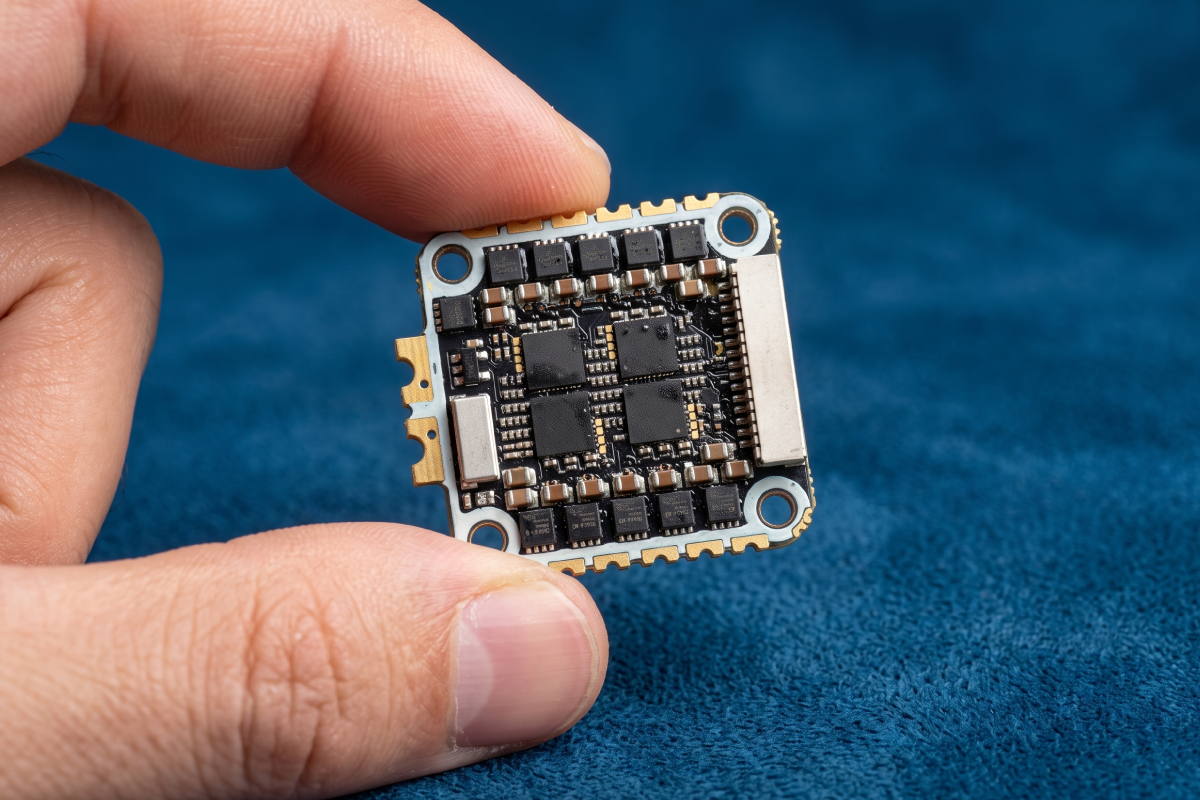
An AIO flight controller — all in one — puts the flight controller and ESC on a single PCB. There's no ribbon cable and no second set of standoffs, meaning fewer parts and fewer solder joints to get wrong. Many AIO boards for small quads also fold in an ELRS receiver, and whoop-class boards often add a VTX on top, turning several purchases into one. AIO boards dominate the 20 × 20 mm and 16 × 16 mm sizes, where a stack simply won't fit. The gap with bigger builds is closing too: the best AIO flight controller options for 5-inch frames now carry current ratings that used to be stack-only.
Flight Controller Stack vs AIO Board: Side-by-Side Comparison
|
Feature |
Stack |
AIO board |
|
Board count |
Two, joined by ribbon cable |
One |
|
Typical weight |
Higher |
Lower |
|
Build time |
Longer, more solder joints |
Shorter |
|
Cost |
Higher |
Lower |
|
Available current ratings |
Up to 60A and beyond |
Usually lower |
|
Heat separation |
ESC heat away from the gyro |
ESC and gyro on one board |
|
Repair after a burnt ESC |
Replace one board |
Replace everything |
|
Upgrade path |
Change one board at a time |
Whole board is replaced |
|
Vertical space needed |
More |
Less |
|
Common sizes |
30 × 30, 20 × 20 |
20 × 20, 16 × 16, 30 × 30 |
The trade here is repair cost against weight and build time. A stack costs more up front in weight, assembly and price, but gives back a board repairable one piece at a time — on a 5-inch quad that crashes a few times a season, that pays off the first time an ESC lets the smoke out. On anything under 3 inches, weight and space decide it before cost even enters the picture.
Flight Controller Sizes: From 30×30 Stacks to 16×16 AIO Boards
Flight controller sizes describe the mounting pattern — the distance between screw holes — and getting it wrong makes a board unusable no matter how good the specs are.
|
Mounting pattern |
Screw size |
Typical build |
Usual format |
|
30.5 × 30.5 mm |
M3 |
5-inch and larger |
Stack, some AIO |
|
25.5 × 25.5 mm |
M2 |
3-inch to 4-inch |
Stack or AIO |
|
20 × 20 mm |
M2 |
Toothpicks, 2-inch to 3-inch |
Mostly AIO |
|
16 × 16 mm |
M2 |
Tiny whoops, 1S and 2S |
AIO only |
That figure is the center-to-center distance between mounting holes, and it has to match across the frame, the flight controller and the ESC. If it doesn't, an adapter plate can fit a smaller board into a larger frame, but it adds back the height and weight the smaller footprint was chosen to avoid.
20×20 vs 30×30 Flight Controller Stack: Choosing the Right Size
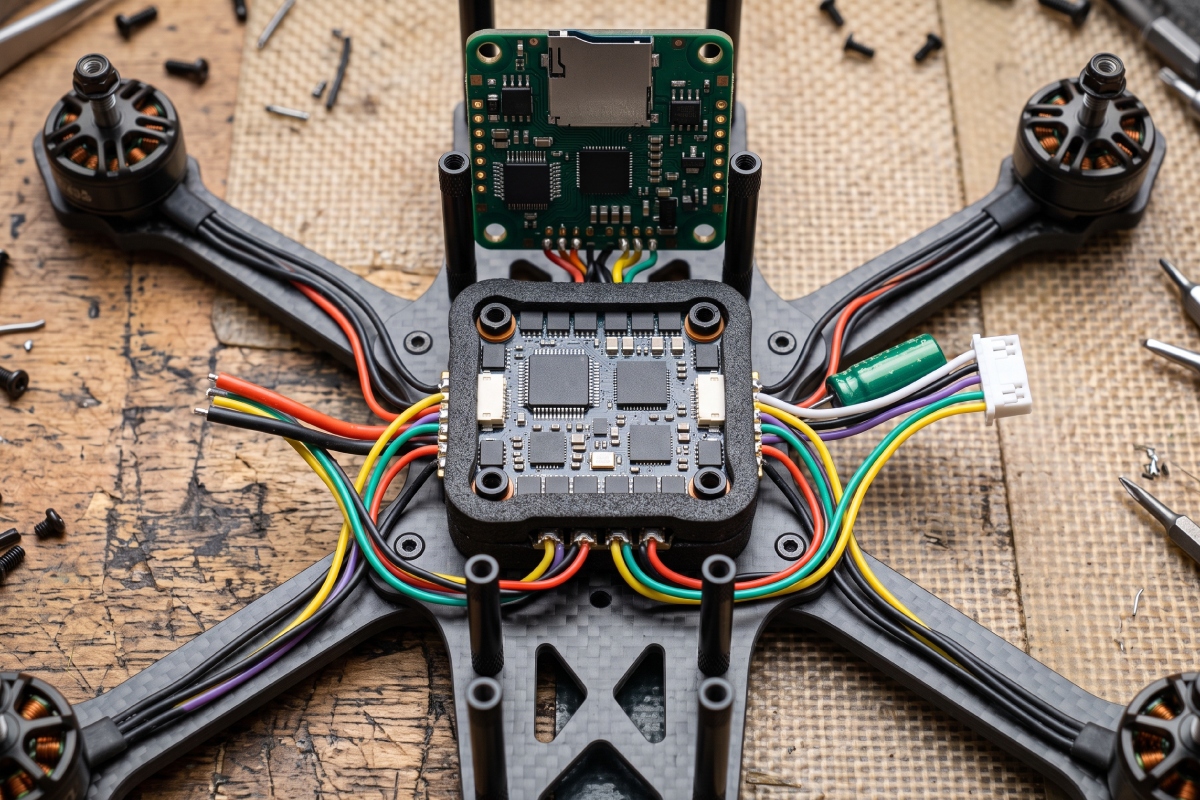
These are the two sizes builders compare most, usually while checking a frame's spec sheet.
- The 30 × 30 flight controller stack is the size the whole 5-inch ecosystem is built around, so it has the widest choice of boards, ESC ratings and replacement parts.
- A 20 × 20 flight controller exists to save weight and space on smaller frames, and pairs with lower current ratings than a 30×30 stack.
- Fitting a 20 × 20 board into a 5-inch build to save weight usually means an ESC running hot under load.
- Fitting a 30 × 30 stack into a 3-inch frame is rarely possible at all.
- The frame decides this, not the pilot — check its stated mounting pattern before ordering either size.
What a Crash Really Costs You: Stack vs AIO Repair Bills
Crash cost is where the two formats separate over a season of flying, more than any spec sheet does.
A burnt ESC is the most common electrical failure after a hard crash, usually from a shorted motor or a bent shaft. On a flight controller stack, that ESC is replaced on its own — the flight controller above it, with its gyro and tune, stays untouched. On an AIO, the same failure means a new board: new solder pads, and the receiver and ports set up again from scratch. Against that, an AIO has fewer joints to fail in the first place and no ribbon cable to work loose. Most frequent flyers keep a spare 4-in-1 ESC on the shelf rather than a spare stack.
Weight, Heat and Space: Why Small Quads Lean on an AIO Flight Controller ESC Combo
Removing the second board, standoffs and ribbon cable saves several grams, which matters most on builds kept under 250 grams, and a lower stack height lets a frame be built shallower. The trade-off is heat: with the ESC's FETs on the same PCB as the gyro, sustained high current can push heat into the sensor and cause thermal drift. That makes airflow and current headroom matter more on a flight controller and ESC combo than on a stack, where the two sit apart. Browse the current FPV drones lineup to see how ready-to-fly builds balance this trade-off.
Compatibility Checklist Before You Buy a Flight Controller Stack or AIO Board
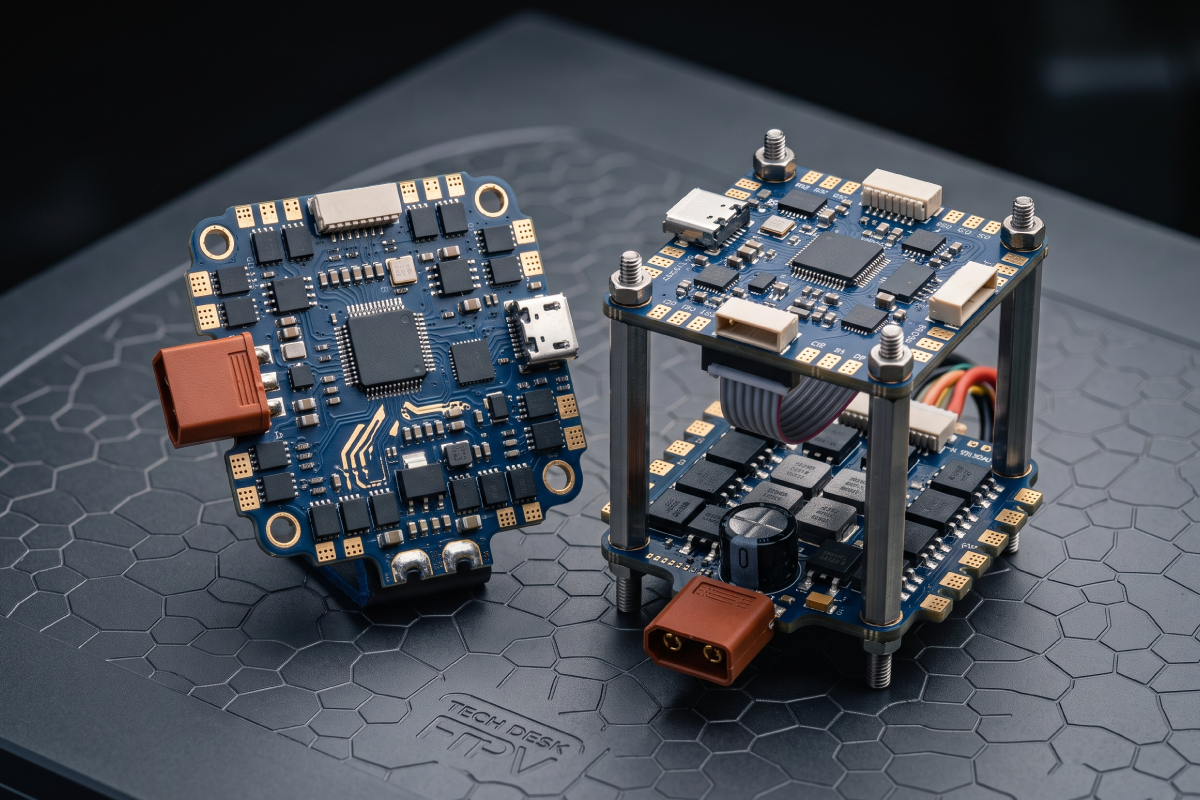
Run through this before ordering a flight controller ESC stack or an AIO board — most returns trace back to one of these:
- Mounting pattern matches the frame, and the flight controller and ESC match each other.
- Stack height fits inside the frame with the top plate on.
- ESC current rating has headroom above the motors' continuous draw.
- The ESC is rated for the battery cell count the build uses.
- The 8-pin ribbon cable is included, and its connector matches both boards.
- Silicone grommets and standoffs are supplied, or bought separately.
- On an AIO flight controller ESC board, the integrated receiver and VTX are ones the build actually needs.
- The board is on a current Betaflight target.
Checking a product page against this list beats comparing spec sheets in the abstract — the flight controllers section lists current ratings and mounting patterns side by side.
Which Format Fits Your Build: A Quick Decision Guide
- 5-inch freestyle → 30 × 30 flight controller stack, for repair cost and ESC choice.
- 5-inch racing → 30 × 30 stack, or a high-current AIO where every gram counts.
- 7-inch long range → 30 × 30 stack, higher current rating, room for GPS.
- 3-inch or toothpick → 20 × 20 AIO flight controller.
- Tiny whoop → 16 × 16 AIO flight controller, usually with the receiver integrated.
- Cinewhoop → depends entirely on the frame; check the stated pattern first.
- First build on a budget → AIO, fewer solder joints and less to get wrong.
Start from the frame's specification and the motor's current draw, then pick the format that satisfies both.
FAQ
What is a flight controller stack?
A stack is a flight controller and a 4-in-1 ESC mounted on standoffs one above the other and joined by an 8-pin ribbon cable. It is the standard format for 5-inch and larger builds, where space allows it and repair cost matters.
What is an AIO flight controller?
An AIO board combines the flight controller and the ESC on one PCB. Smaller versions often add the receiver, and whoop boards often add the VTX as well. It saves weight, height and build time at the cost of replacing everything if one part fails.
Is an AIO flight controller worse than a stack?
No, but it fails differently. AIO boards have fewer solder joints and fewer connections to work loose, so there's less to go wrong in the build — but when something does fail, the repair costs more.
What is the difference between 20×20 and 30×30?
The numbers are the distance in millimeters between the mounting holes. 30 × 30 uses M3 screws and suits 5-inch builds; 20 × 20 uses M2 screws and suits small quads. The frame determines which one fits.
Can I fit a 20×20 board in a 30×30 frame?
Yes, with an adapter plate. It adds height and weight, and the smaller board usually carries a lower current rating than a 5-inch build needs, so it is a workaround rather than a plan.
Which format is lighter?
An AIO, in every comparable size. Removing the second board, the standoffs and the ribbon cable saves weight that matters most on builds kept under 250 grams.
Browse the full range of flight controllers and ready-to-fly kits in the drone store to compare current ratings and mounting patterns before you order.