
FPV Drone Propeller Guide: How to Choose Size, Pitch, and Material
Posted by Roman on 29th Jul 2026
A properly selected FPV drone propeller determines the behavior of the drone in the air. They influence the thrust, acceleration, handling, flight time, noise, and load on the motor. The right propellers make the FPV drone easier to control and maneuver. The use of inappropriate propellers may cause problems such as overheating, unstable performance, rapid battery depletion, or excessive noise. The selection of propellers for FPV drones is based on their size, pitch, number of blades, and construction.
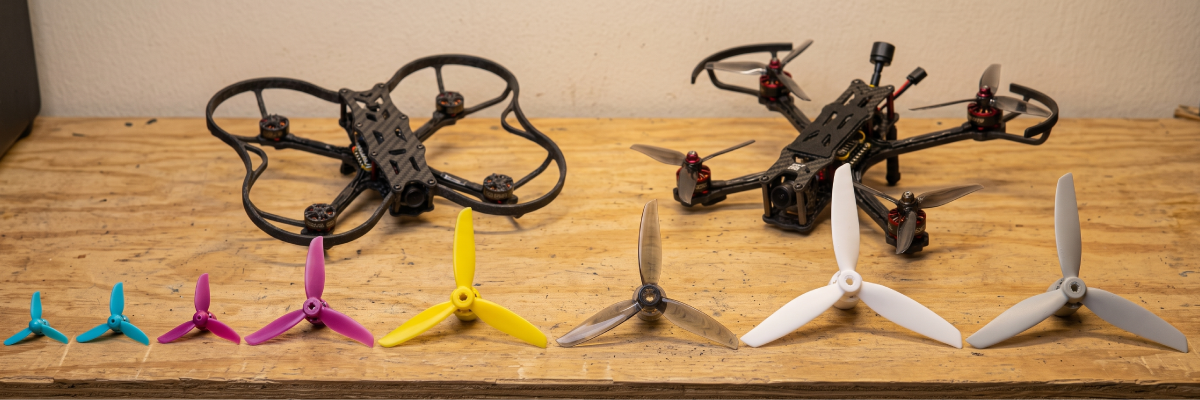
Why FPV Drone Propellers Shape Flight Behavior
The propeller for a drone generates thrust through motor rotation and influences acceleration, maneuverability, performance, and strain on the power system. The drone propeller design and its characteristics affect the drone's climb rate, response to rapid control changes, and battery consumption.
When building an FPV drone, there are several components to consider. Aggressive freestyle requires fast response and good air grip. Long-range configurations are more likely to focus on efficiency and stable thrust.
When assembling, it is worth checking the power unit's compatibility with other components, including drone antennas. The location of the equipment affects balance, aerodynamics, and ease of installation.
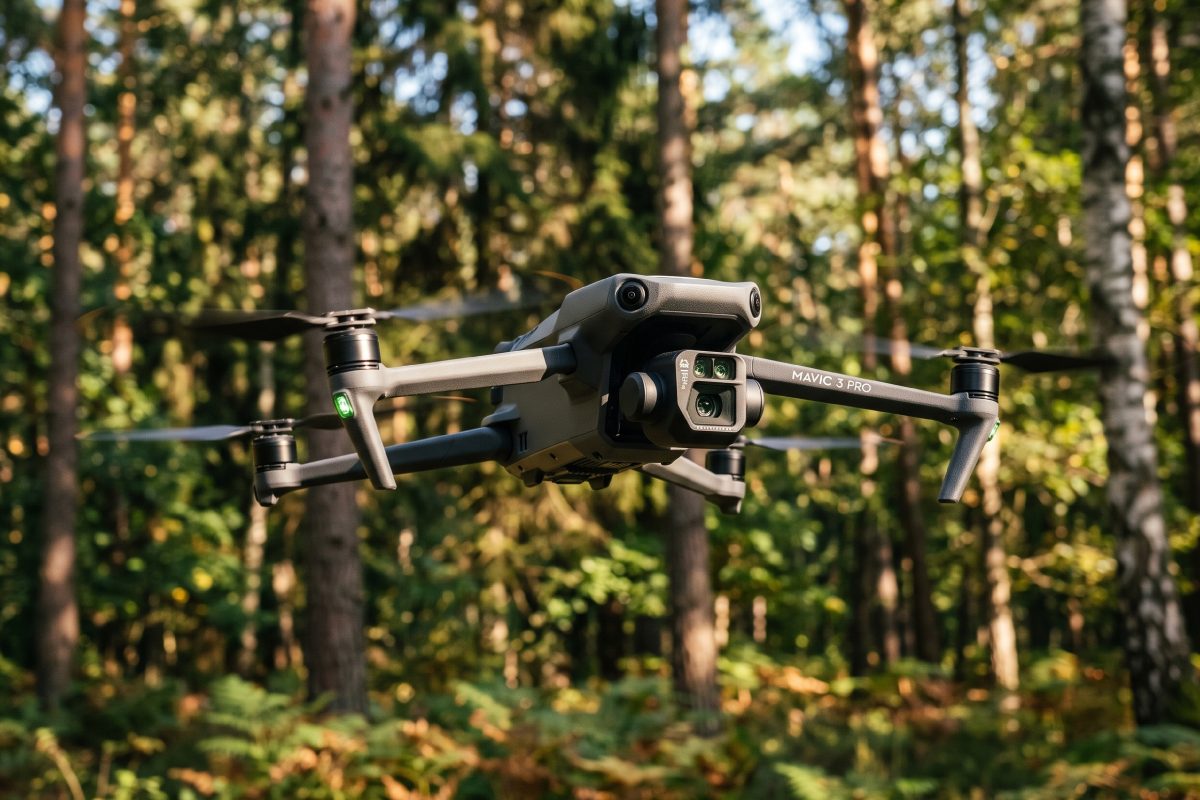
How Propellers Affect Flight Performance
The size, pitch, and shape of the blades, as well as the material, determine the drone's response to the throttle. A larger diameter usually creates more thrust but increases the load. A higher pitch can give better speed, but it often increases power consumption. The number of blades affects stability and air grip, and the material's stiffness affects the accuracy of the response.
The propeller should be evaluated together with the motors, ESC, battery, and frame.
The same model can work differently on different motors, batteries, and frames due to differences in KV, voltage, and total load.
Understanding Drone Propeller Size and Dimensions
Drone propeller dimensions include diameter, pitch, and number of blades. According to the marking HQProp J75 (7X5X3), the first number indicates the diameter in inches, the second indicates the pitch, and the third indicates the number of blades.
The small HQProp T3.5X2.2 is suitable for compact builds where lightness and control are important. HQProp J75 (7X5X3) is a medium FPV format. BrotherHobby V5 1660 (16x6.0) is an example of a large solution for long-range or heavy platforms.
The following parameters affect drone propeller size:
- thrust level;
- motor load;
- flight duration;
- control feel;
- compatibility with the frame;
- battery discharge rate;
- potential maximum speed.
As the diameter increases, thrust increases, but so do the demands on the motors, ESCs, and batteries. Large propellers require sufficient clearance between the frame arms.
Propeller Pitch Explained for FPV Builds
Pitch is how far the propeller would theoretically move forward in one full revolution under ideal conditions. In-flight results will vary due to air slip, but this parameter is a good indicator of the model's nature.
A higher pitch usually adds speed and sharpness to the response. At the same time, it can increase the current, motor heating, and ESC load. For comparison, the HQProp MacroQuad 8X4X3 has a pitch of 4 inches, and the HQ MacroQuad 8X6X3 has a pitch of 6 inches. The 8X6X3 version may provide greater thrust at high speeds but requires a more powerful system.
How to choose a propeller? It is worth starting with the motor manufacturer's recommendations. You can then test different pitches while monitoring the propulsion system's temperature and the drone’s flight behavior.
2-Blade, 3-Blade, and 4-Blade Drone Propeller Types
Different drone propeller types change the nature of the flight. Two-blade models have lower drag and often offer greater efficiency. Three-blade propellers offer an appropriate compromise of thrust, control, and load, hence their use on freestyle and racing drones. Four-blade propellers could offer better grip, although they sometimes increase energy consumption.
|
Propeller Type |
Main Advantage |
Possible Disadvantage |
Best Uses |
|
2-blade props |
Higher efficiency |
Less traction |
Long-range, cruising |
|
3-blade props |
Balance of thrust and control |
More load than 2-blade |
Freestyle, racing |
|
4-blade props |
Strong response and grip |
Higher current |
Maneuvering assemblies |
The HQProp T3.5X2.2 is an efficiency-oriented model. The HQProp J75 (7X5X3) demonstrates a common three-blade configuration. Three blades are often chosen by FPV pilots because they maintain stability without dramatically increasing the load.
Choosing Propeller Materials for FPV Drones
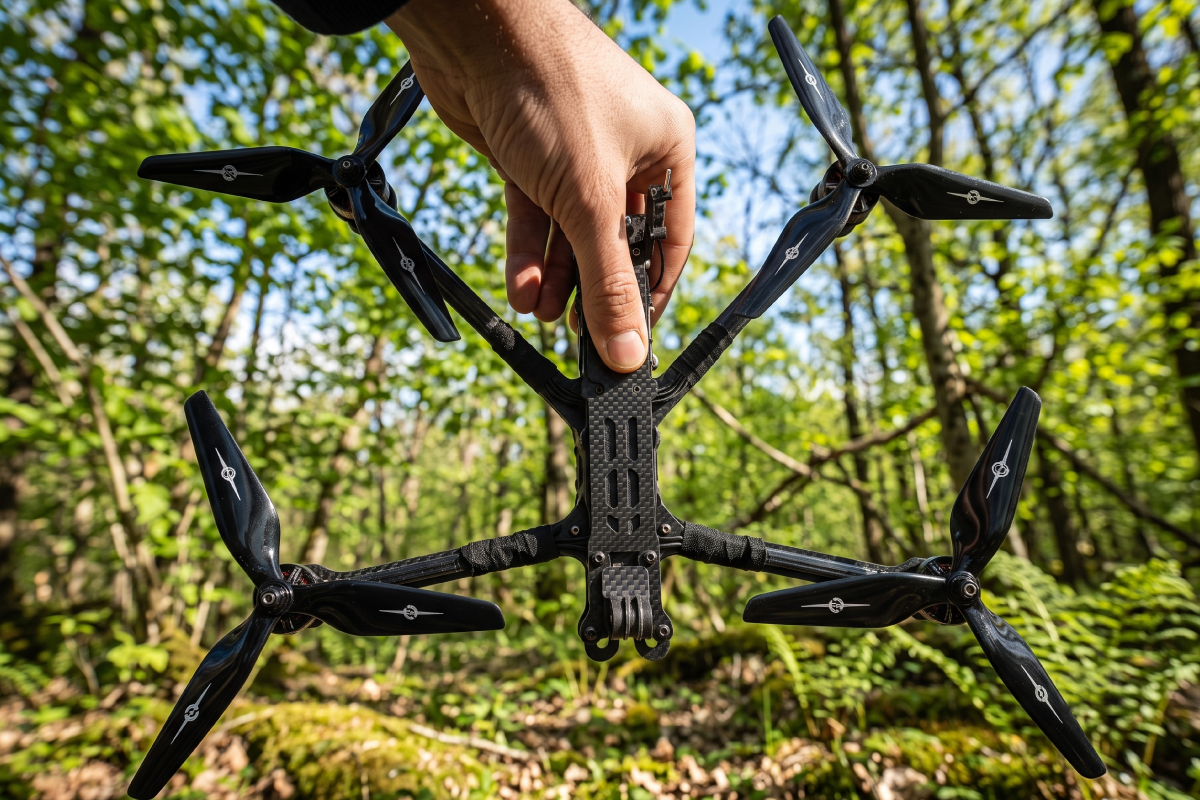
The material determines the blades' performance in terms of rigidity, weight, flexibility, and reaction time. The most common include plastic, nylon, polycarbonate, and reinforced composite materials. Polycarbonate is commonly used for FPV drones due to its flexibility, affordability, and tolerance to minor impacts. The HQProp J75 polycarbonate is an example of a model designed for regular flights and possible crashes. The HQProp 17X8X3 Black-Glass Fiber Reinforced Nylon has a stiffer construction made of glass-fiber reinforced nylon. This option is suitable for large platforms where the shape of the blades must be maintained under load.
Flexible vs Stiff Propellers
Flexible propellers often survive contact with obstacles better because they can deform without instantly breaking. Stiff models provide a more precise response and a more stable shape under load. At the same time, they can transmit more vibrations to the frame and break during a hard impact. The choice depends on the flight style and conditions of use.
Matching Props for Quadcopter With Motors and ESCs
Props for a quadcopter need to be selected according to the entire power system. Not only is the frame size important, but also the motor size, KV rating, ESC current limit, battery voltage, and expected load.
Before choosing quadcopter propellers, check:
- Frame size and propeller clearance.
- Motor KV rating.
- Motor size and class.
- ESC current rating.
- Battery voltage.
- Flight style.
- Manufacturer recommendations.
HQProp J75 (7X5X3) can be considered with 2207–2806-class brushless motors in the appropriate configuration. BrotherHobby V5 1660 requires significantly larger motors and ESCs due to diameter and load. Before installing, check the specifications of the Speed Controllers (ESC) to ensure that you do not exceed the current rating.
Best Drone Propellers by Flying Style
The best drone propellers depend on your flying style. Racing drones usually require fast response and strong acceleration. Freestyle builds benefit from a balance between control and thrust. Smoothness and predictability are critical for the cinematic flights, whereas efficiency is necessary for the long-range flights.
Three-blade models with moderate to high pitch are usually chosen for high-speed flights. For long flights, two-bladed options with a lower load may be appropriate. There is no universal best drone propeller model: the optimal option depends on the configuration.
Common Errors When Selecting a Propeller for a Drone
A common mistake is to choose a propeller only by diameter. You need to consider the pitch, number of blades, material, and the power system's capabilities. Do not ignore the direction of rotation, clearance to the frame, and condition of the blades.
The HQ MacroQuad 8X6X3 can overload an insufficiently powerful configuration due to its higher pitch. The MacroQuad 8X4X3 could be an efficient alternative to the HQProp. Any damage to the drone's blades must be repaired, as even the slightest deformity can cause vibrations.
FAQ
What are the best propellers for an FPV drone?
The choice will depend on the frame dimensions, motors, battery, and flight technique. Three-blade propellers are chosen for freestyle drones, and efficient two-blade ones are selected for long-range.
How do I know what propeller size my drone needs?
It can be seen from the frame description and the allowable propeller diameter. It is essential not to forget about leaving enough space between the blades and the frame.
What does propeller pitch mean on a drone?
Pitch indicates how far the propeller theoretically travels in one revolution. A higher pitch usually increases speed but also increases load and current consumption.
Are 2-blade or 3-blade props better for FPV?
Two-blade models are often more efficient, while three blades provide a better balance of thrust and control. For most freestyle builds, three blades are a practical choice.
Do drone propeller materials matter?
Yes. The material affects the drone's flexibility, strength, weight, and responsiveness. Polycarbonate is popular due to its combination of affordability and impact resistance.
Can the wrong propeller damage my drone?
Yes. The wrong propeller can overload the motors and ESCs, causing overheating, increased current draw, instability, or reduced flight time.