
Drone ESC Guide: How to Pick the Right Controller for Your Build
Posted by Roman on 29th Jul 2026
The ESC is an important component of the drone power system. It determines how each motor responds to commands from the flight control, affecting the drone's take-off, maneuvers, stability, and operations under load. The wrong controller might overheat, fail to deliver power, or even damage compatible components. When selecting an ESC, you must consider motor current, battery voltage, firmware, board type, and the drone's intended use. The right electronic speed controller for drones will maintain the model’s expected behavior in flight.

What Is an ESC in a Drone Power System?
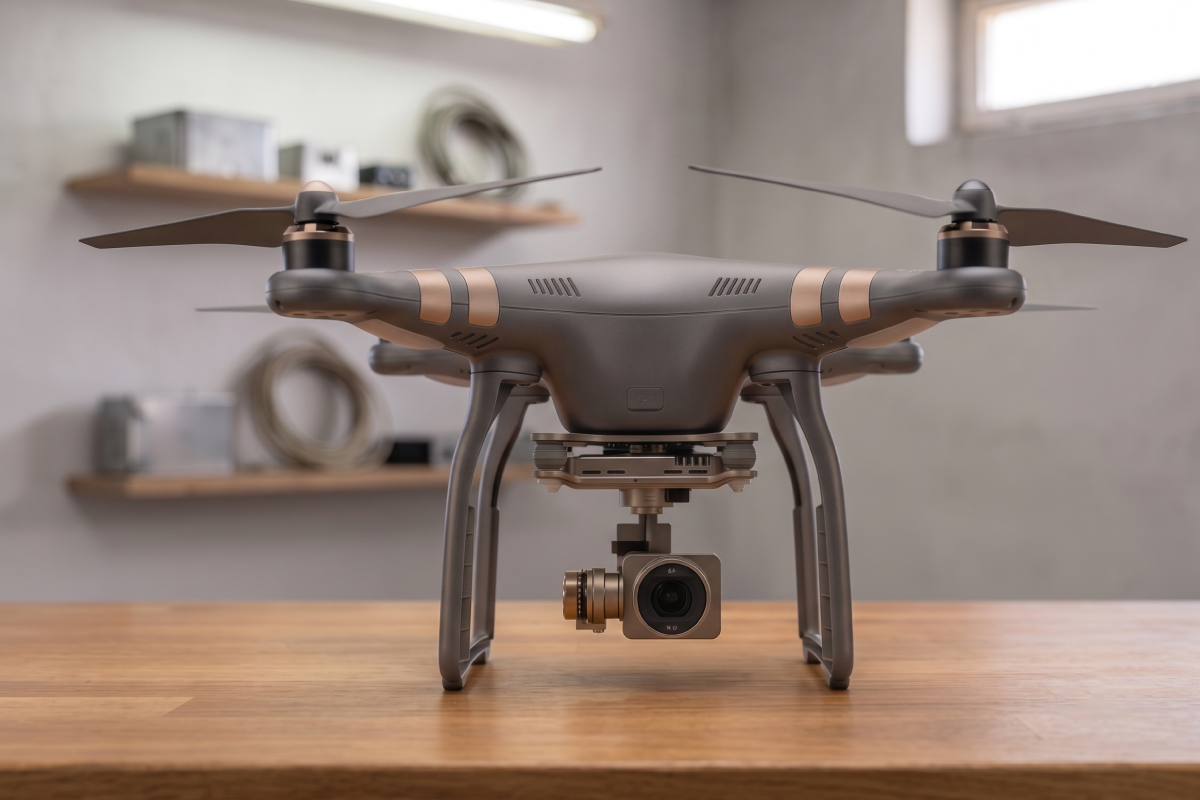
The term what is electronic speed controller describes an electronic speed controller. The unit receives a digital signal from the flight controller and switches battery power through three motor phases according to commands from the flight controller. The controller controls the timing and switching of current across the motor’s three phases, causing the motor to change its speed.
In the FPV setup, the ESC serves as an intermediary between the battery, the flight controller, and the motors. The controller parameters must match those of the load, i.e., the propellers, voltage supply, and power electronics components.
What Does an Electronic Speed Controller Do?
An electronic speed controller ESC regulates the speed of each motor separately. When turning, pitching, or changing altitude, the flight controller sends different commands to each channel. The controller executes these commands by changing the power supply to the corresponding motor.
For example, when pitching forward, the rear motors can receive more power while the front ones receive less. This distribution helps change the drone's position in space. Each motor needs a separate control channel; otherwise, stable operation of the quadcopter is impossible.
How ESC Working Controls Drone Motors
The process of ESC working can be presented as a sequence of actions between the pilot, receiver, flight controller, and power unit:
- The pilot moves the throttle on the transmitter.
- The receiver transmits the command to the flight controller.
- The controller processes the drone’s position and the required thrust.
- The flight controller sends a signal to the motor controller.
- The ESC controls phase switching and modulates power delivered to the motor.
- The motor changes speed, and the drone responds to the command.
The question of how do electronic speed controllers work is related to this cycle. The ESC doesn’t just deliver power in an on-off mode. It constantly adjusts the current supply to respond to flight changes and ensure smooth operation of an ESC for motor system.
The controller translates the flight controller’s command into precise control of the motor’s speed.
For a stable build, the controller’s compatibility with other FPV Electronics, including the flight controller, receiver, video transmitter, and power system, is important.
ESC Types for FPV and Custom Drones
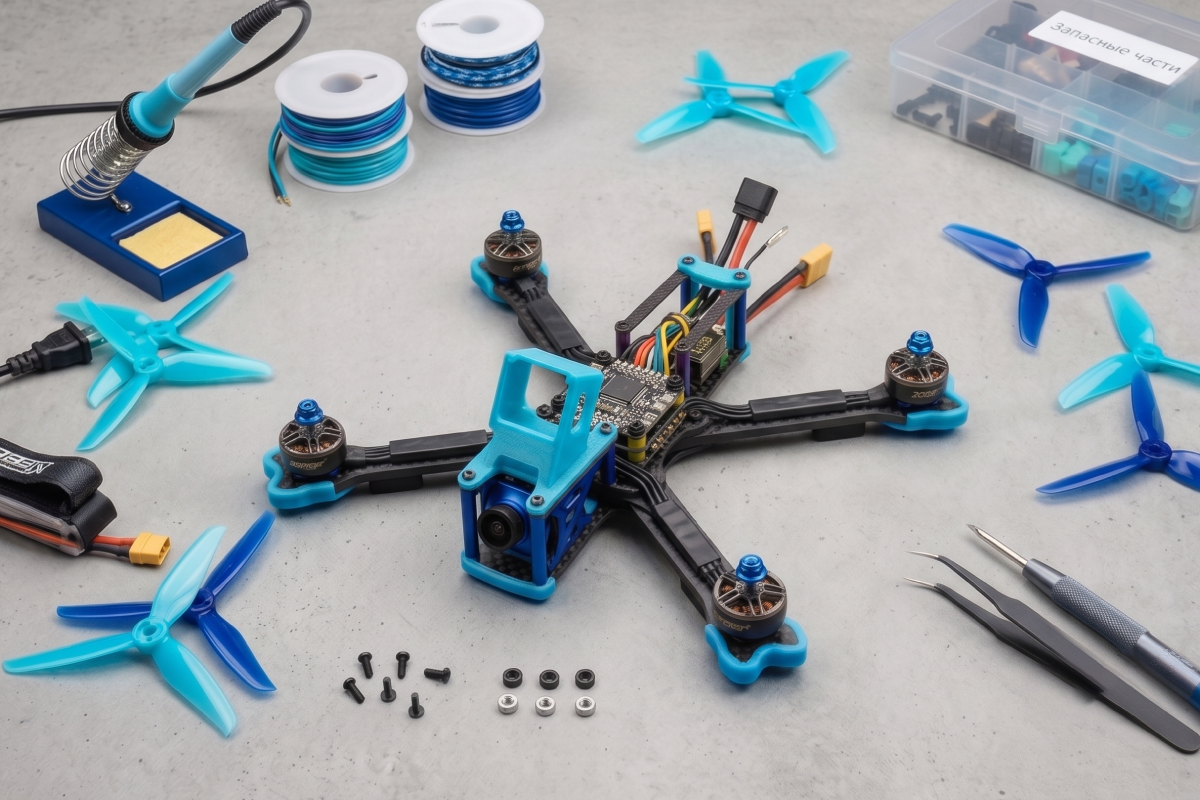
Drones use individual ESCs and 4-in-1 ESCs. The first option involves a separate controller for each motor. The second combines four channels on one board. Both formats can use the same protocols but differ in mounting, weight, wiring, and repair.
Compact FPV drones are often equipped with 4-in-1 boards, as they help reduce the number of wires in the central part of the frame. Individual electronic speed controllers remain relevant for large or non-standard configurations, where it is important to place components closer to the motors.
Individual ESC vs 4-in-1 ESC
|
Factor |
Individual ESC |
4-in-1 ESC |
|
Placement |
One ESC on each arm |
One board for four motors |
|
Wiring |
More cables |
Tidier layout |
|
Repair |
One controller can be replaced |
Often the entire board needs to be replaced |
|
Cooling |
Better airflow on the beams |
Depends on the placement in the frame |
|
Weight |
Can be higher |
Often lower |
|
Suitable for |
Large, custom and heavy FPV builds |
Freestyle, racing, compact frames |
4-in-1 ESC is convenient for clean mounting and most modern FPV frames. Individual ESCs may be more practical for repairs after a single beam is damaged or for platforms with large motors.
ESC Specifications That Matter Before Purchase
When choosing an ESC motor controller, you should check more than just the maximum current rating. The continuous current rating indicates the current the ESC can handle under specified cooling conditions. The burst current rating indicates the short-term permissible peak current, for example, during a sharp throttle opening. Both values should be higher than the motors' actual consumption with the selected propellers.
The supported voltage determines whether the ESC is suitable for a 4S, 6S, or other battery pack. Also important are the firmware and signal protocol: modern builds often use DShot, which provides digital communication between the flight controller and the ESC.
Check the following specifications:
- continuous and peak current;
- supported battery voltage;
- firmware type;
- signal protocol;
- board size and mounting pattern;
- weight;
- cooling and thermal stability;
- compatibility with motors;
- connection to the flight controller.
The ESC must have a margin of current and not be operated at the limit of its capabilities. High load without proper cooling can cause overheating or protection tripping.
Choosing the Best ESC for Drone Configuration
Selecting the best ESC for a drone depends on the drone’s size, motor size and KV rating, battery voltage, propellers, and flying technique. Racing models operate with sudden throttle shifts; therefore, they require an ESC with sufficient current capacity and the appropriate protocol. Freestyle models must withstand short peaks during maneuvers. Cinematic drones are more often focused on smooth response, and long-range platforms - on stability and efficiency.
Selection sequence:
- Check the motor's maximum current consumption.
- Choose an ESC with a margin in amperage.
- Compare the supported voltage with the battery.
- Make sure that the firmware and signal protocol are supported.
- Check the weight, size, and mounting template.
- Consider the location of the board in the frame.
- Follow the manufacturer's recommendations.
For FPV builds where video is important, it is useful to think in advance about mounting FPV Cameras. The location of the camera, VTX, and wires should leave enough space for the electronic speed controller and not interfere with cooling.
Common Problems When Selecting a Drone ESC
One mistake pilots make is selecting an ESC with too low an amperage rating. Even when the drone operates at moderate speed, short bursts of current might exceed the permitted level. Yet another mistake consists of neglecting battery voltage. An ESC rated only for 4S must not be used with a 6S battery.
The issues may also stem from improper firmware or protocol configuration, poor soldering, or cooling problems. Low cost must not be the only factor. A controller with unreliable components can cause drone motor control problems and make diagnostics difficult after an accident.
Final Considerations for Electronic Speed Controllers
The ESC converts flight controller commands into electrical switching signals that drive the motor. Its characteristics must match the current, battery voltage, propeller load, frame type, and drone tasks. A quality ESC FPV helps maintain a stable throttle response and reduces the risk of overheating the power system. Evaluate the controller along with the motors, battery, propellers, and flight controller to avoid incompatibilities between components.
FAQ
What is an ESC in a drone?
An ESC is an electronic speed controller that receives commands from the flight controller and controls the brushless motor's speed.
How do electronic speed controllers work?
The controller receives a signal from the flight controller, processes it, and supplies the motor with controlled electrical energy. Changing the current supply changes the rotational speed.
Does every drone motor need an ESC?
Yes. Each brushless motor requires its own ESC output channel; a 4-in-1 ESC provides four independent channels on one board.
Which ESC amp do I need for my drone?
You need to focus on the motors' maximum current with the selected propellers. The ESC should have a margin for continuous current and burst current.
What is better: individual ESC or 4-in-1 ESC?
4-in-1 unit is suitable for compact FPV builds and clean installation. Individual ESC is more convenient for repairs and large custom platforms.