
Drone Categories Explained: 10 Main Types and Their Uses
Posted by Roman on 4th Aug 2026
The world of drone types is broader than it first appears. Some models are built for travel and aerial photography, while others focus on racing, mapping, or industrial inspection. Each design is tailored to a specific task, from lightweight recreational flying to heavy-duty commercial operations. Understanding the main categories helps beginners avoid the wrong purchase and gives a clearer picture of how these aircraft fit into real-world use.
What Are the Main Types of Drones?
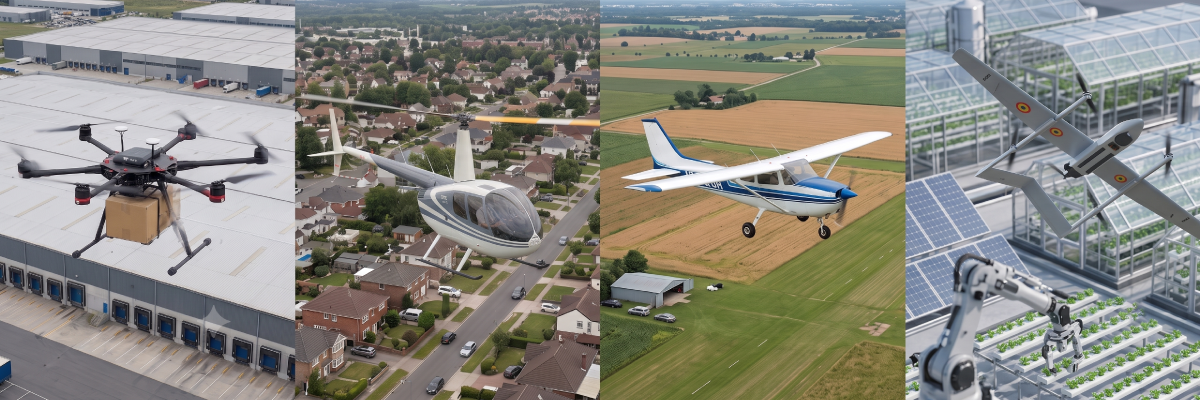
Most aerial platforms are grouped by design and flight behavior. The simplest way to understand the market is through the 4 types of flying platforms:
- multirotor drones
- fixed-wing flying platforms
- single-rotor drone systems
- hybrid VTOLs
This classification gives a high-level view, but it’s only the starting point. Each category includes more specific formats. For example, a quadcopter is part of multirotor designs, while a delivery drone may belong to hybrid VTOL systems. In practice, categories often overlap. A camera drone can also be a quadcopter, and a commercial drone may combine vertical takeoff with long-range flight. Understanding this flexibility makes it easier to navigate the growing drone market without confusion.
Comparison Table: 10 Types of Drones at a Glance
|
Drone Type |
Main Design |
Best Use |
Main Advantage |
Main Limitation |
|
Quadcopter |
4 rotors |
Photography, beginners |
Balance of price and control |
Limited flight endurance |
|
Hexacopter |
6 rotors |
Pro video, heavier payloads |
Extra stability |
Higher cost |
|
Octocopter |
8 rotors |
Cinema, industrial lifting |
High payload capacity |
Expensive, less portable |
|
Fixed-wing aircraft |
Airplane-style |
Mapping, long flights |
Excellent battery efficiency |
Needs more launch space |
|
Single-rotor systems |
Helicopter-style |
Specialized industrial use |
Longer endurance than many multirotors |
More complex mechanics |
|
Hybrid VTOL platforms |
Vertical takeoff + wing flight |
Surveying, delivery |
Versatile flight profile |
Higher cost and complexity |
|
Racing models |
Lightweight FPV build |
Speed and sport flying |
Extreme maneuverability |
Short battery life |
|
Camera-focused aerial systems |
Usually quadcopter |
Aerial photography |
Stabilized video capture |
Not built for heavy-duty work |
|
Toy models |
Small multirotor |
Indoor practice |
Affordable and beginner-friendly |
Weak stability outdoors |
|
Agricultural and commercial platforms |
Large mission-based platform |
Spraying, inspection, mapping |
Task-specific performance |
Expensive and regulated |
The 4 Main Types of Drones by Aircraft Design
When people talk about the 4 types of drones, they usually mean how the drone is built and how it flies. This view focuses on structure rather than purpose. It helps explain why some flying platforms can hover in place while others are better for distance or lifting weight. Each design has its own balance of stability, control, and flight endurance.
Multirotor Drones
Multirotor flying platforms are the most common option today. This group includes the well-known quadcopter, along with hexacopters and octocopters. They use multiple drone propellers to stay stable and hover easily. This makes them ideal for aerial photography and everyday flying. They are also the most beginner-friendly type.
Fixed-Wing Drones
Fixed-wing drones fly more like airplanes. They move forward to stay in the air, which improves battery life and range. These flying platforms are often used for mapping and surveying large areas. However, they need more space to launch and land.
Single-Rotor Drones
A single-rotor drone works like a helicopter. It can carry more weight and stay airborne longer than many multirotors. This makes it useful for industrial inspection and some commercial platform tasks, though it is harder to manage.
Hybrid VTOL Drones
Hybrid VTOLs combine vertical takeoff with forward flight. They are used when both flexibility and distance matter, such as in delivering aircraft systems or long-range missions.
Multirotor Designs by Rotor Count
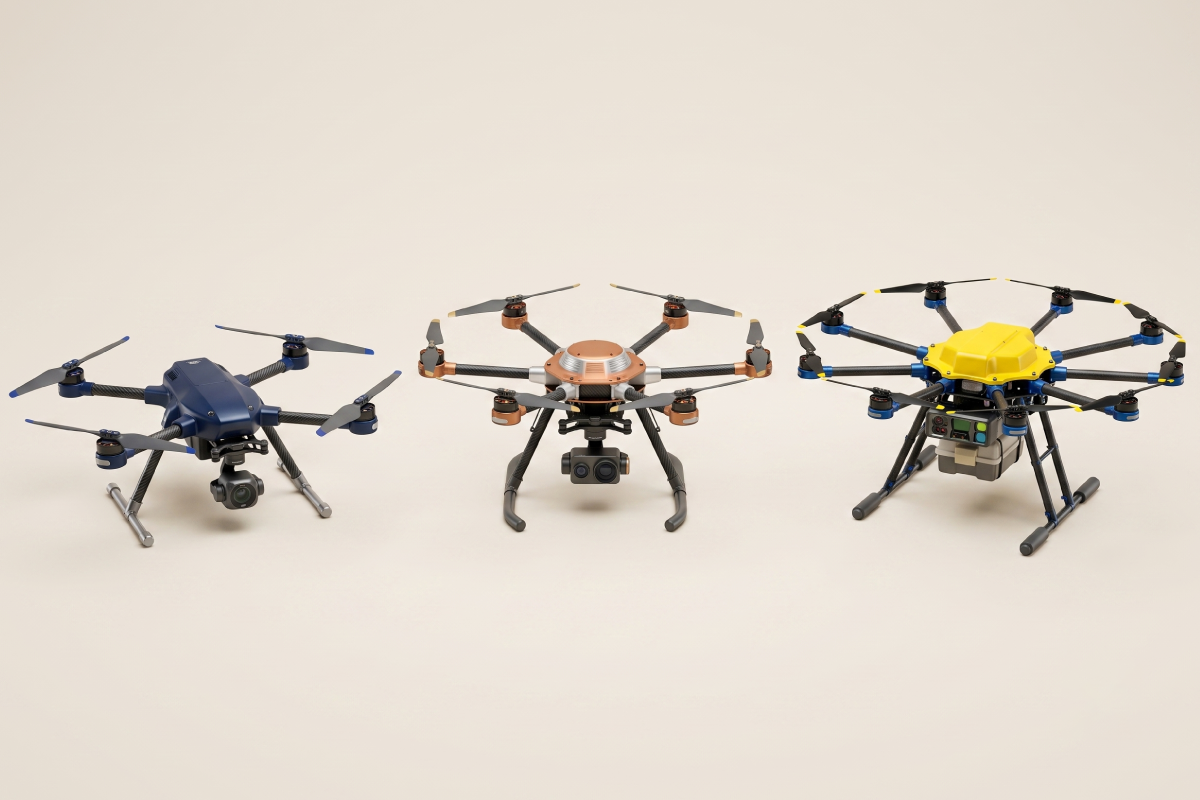
When people search for types of drones, they often mean more than just one format. In reality, this term also covers similar multirotor setups with different rotor counts. The number of motors directly affects stability, maneuverability, payload capacity, and even battery life.
- Quadcopters – the most common choice. With four rotors, they offer a solid balance between control and cost. Ideal for beginners, content creators, and everyday flying.
- Hexacopters – built with six rotors. They provide more lifting power and can stay stable even if one motor fails. Often used in more demanding drone models for video work.
- Octocopters – eight rotors and a focus on heavy-duty tasks. These are used in cinema or commercial drone operations where carrying larger cameras or equipment matters.
In simple terms, more rotors usually mean better lifting ability and smoother flight, but also higher cost and reduced efficiency.
10 Popular UAV Categories and Their Uses
To better understand the market, it helps to look at the 10 types of drones and how they are used in practice:
- Quadcopter drones – the standard for aerial photography, casual flying, and entry-level users.
- Hexacopter drones – often used for professional video where extra stability is important.
- Octocopter drones – built for cinema and lifting heavy gear with high payload capacity.
- Fixed-wing drones – designed for mapping and long-distance surveying thanks to efficient flight.
- Single-rotor drones – used in specialized industrial inspection where longer airtime is needed.
- Hybrid VTOL drones – combine vertical takeoff with forward flight, often seen in delivery aircraft systems.
- Racing drones – fast and lightweight, built for speed and extreme maneuverability.
- Camera drones – focused on stabilized video and photos, popular among creators.
- Toy drones – small and simple, great for indoor practice and learning basic control.
- Agricultural or commercial drones – used for spraying, surveillance, and large-scale operations.
Each type is built around specific drone components and flight goals, which is why no single model fits every task.
Which Drone Type Is Best for Beginners?
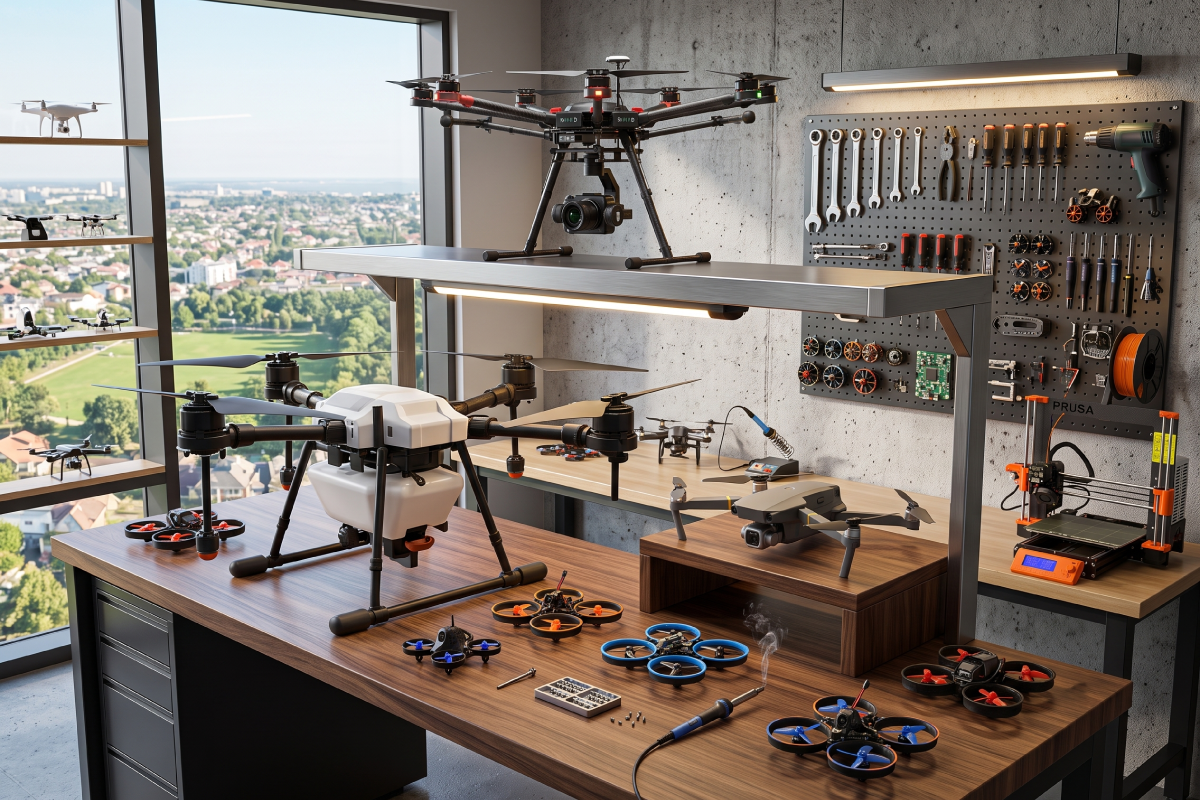
For most new pilots, starting simple is the right move. A small quadcopter or toy drone gives enough control without being overwhelming. These flying platforms offer stable hover, easy handling, and widely available parts.
Entry-level quadcopters are popular because they combine control with decent camera quality. At the same time, racing flying platforms demand fast reactions, and fixed-wing drones need more open space, which makes them less suitable at the start.
Beginners usually look for flying platforms that are:
- easiest to fly
- easiest to repair
- easiest to find parts for
That’s why compact multirotors remain the go-to first step.
How Drone Types Differ in Flight Time, Stability, and Payload
Different drone categories behave very differently in real use. It’s not just about size or price – it comes down to how they fly and what they can carry.
Multirotors are known for precise control and strong stability, which makes them ideal for filming and close-range work. The trade-off is shorter battery life, especially when hovering. In contrast, fixed-wing drones are built for distance. They stay in the air much longer and offer excellent flight endurance, but they can’t hover or handle tight spaces.
Hybrid VTOL flying platforms sit somewhere in between. They combine vertical takeoff with forward flight, giving them both flexibility and range. At the top end, heavy commercial platforms are designed to carry serious weight. Their payload capacity is unmatched, but this also means higher cost and more complex operation.
The best drone type depends less on price and more on how the aircraft is expected to fly and what it needs to carry.
Understanding these differences makes it easier to choose a drone that actually fits the job.
Consumer vs Commercial Drone Types
Not all flying platforms are built for the same purpose. Consumer drones focus on ease of use, portability, and camera quality. They are made for everyday flying, travel, and content creation.
In contrast, a commercial platform is designed for work. These platforms are used in mapping, agriculture, industrial inspection, and even delivery. While both types share similar airframe basics, professional use demands more advanced features. This includes better payload capacity, precise GPS navigation, and autonomous flight capabilities.
In short, consumer flying platforms are about convenience, while commercial systems are built around performance and specific tasks.
Whether you are looking for a beginner-friendly quadcopter, a professional aerial platform, or replacement flight components, our store offers both ready-to-fly models and essential parts for upgrades, repair, and customization.
Frequently Asked Questions (FAQ)
What are the 4 types of drones?
The 4 types of flying platforms are based on aircraft design: multirotor flying platforms, fixed-wing drones, single-rotor aircraft systems, and hybrid VTOLs. This classification focuses on how drones generate lift and move in the air, not just how they are used.
What are the 10 types of drones?
A common way to break things down further is by use case. The 10 types of drones usually include quadcopters, hexacopters, octocopters, fixed-wing drones, single-rotor drones, hybrid VTOL drones, racing drones, camera drones, toy drones, and agricultural or commercial platforms.
What is the most common type of drone?
The quadcopter is the most widely used format. It offers a good mix of stability, maneuverability, and simple controls, which makes it popular among both beginners and casual users.
Are all camera drones quadcopters?
Not all of them. While many camera aircraft models use a quadcopter design, some professional setups rely on six or eight rotors to improve balance and support higher payload capacity.
Which drone type flies the longest?
In most cases, fixed-wing flying platforms stay in the air the longest. Their design allows them to use energy more efficiently, which leads to better flight endurance compared to multirotor systems.
Which type of drone is best for beginners?
For a first flight, it’s best to keep things simple. A small quadcopter or toy drone is usually the easiest option, thanks to stable hover, basic controls, and a lower risk if something goes wrong.