
Brushless Motor KV Rating: How to Choose a Motor for an FPV Kit
Posted by Roman on 29th Jul 2026
Brushless Motor KV Rating is an important criterion to consider when selecting a brushless motor. Unfortunately, many users don’t fully understand its meaning. The higher the KV rating, the better, not always for your motor. The brushless motor's KV rating needs to be compatible with other parameters of your system. For an FPV drone, RC model, or other electric platform, it is important to evaluate the entire system. In this article, we will examine how KV affects RPM, thrust, heat, current draw, and efficiency, using examples from BrotherHobby, iFlight, T-Motor, and GEPRC motors.
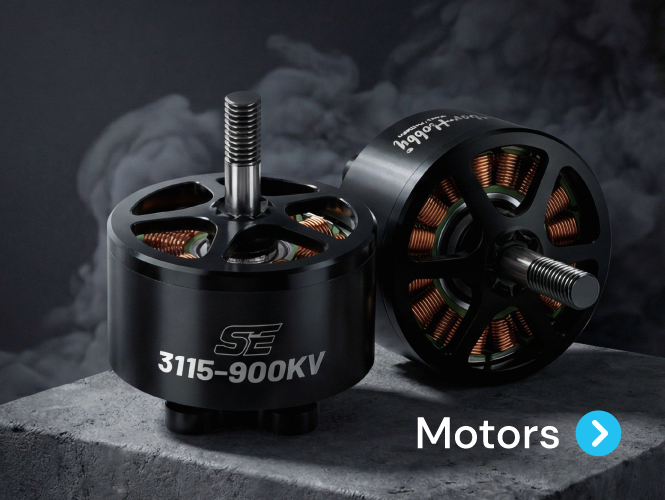
Understanding Brushless Motor KV Rating in Practice
The concept of brushless motor KV rating refers to the number of revolutions per minute that the unit can theoretically make for each volt of voltage without a load. For example, a motor with a rating of 2000 KV at a voltage of 10 V has the potential to reach approximately 20,000 RPM without a propeller. This does not guarantee that the motor will always run at this speed, as the actual RPM will decrease due to load.
For example, the T-Motor F60 Pro V 2020KV and T-Motor F60 Pro V 2550KV models also belong to the same family; however, the 2550KV model is theoretically expected to produce higher revolutions per minute than the former. This, however, would necessitate a more thorough selection of the propeller and its power settings.
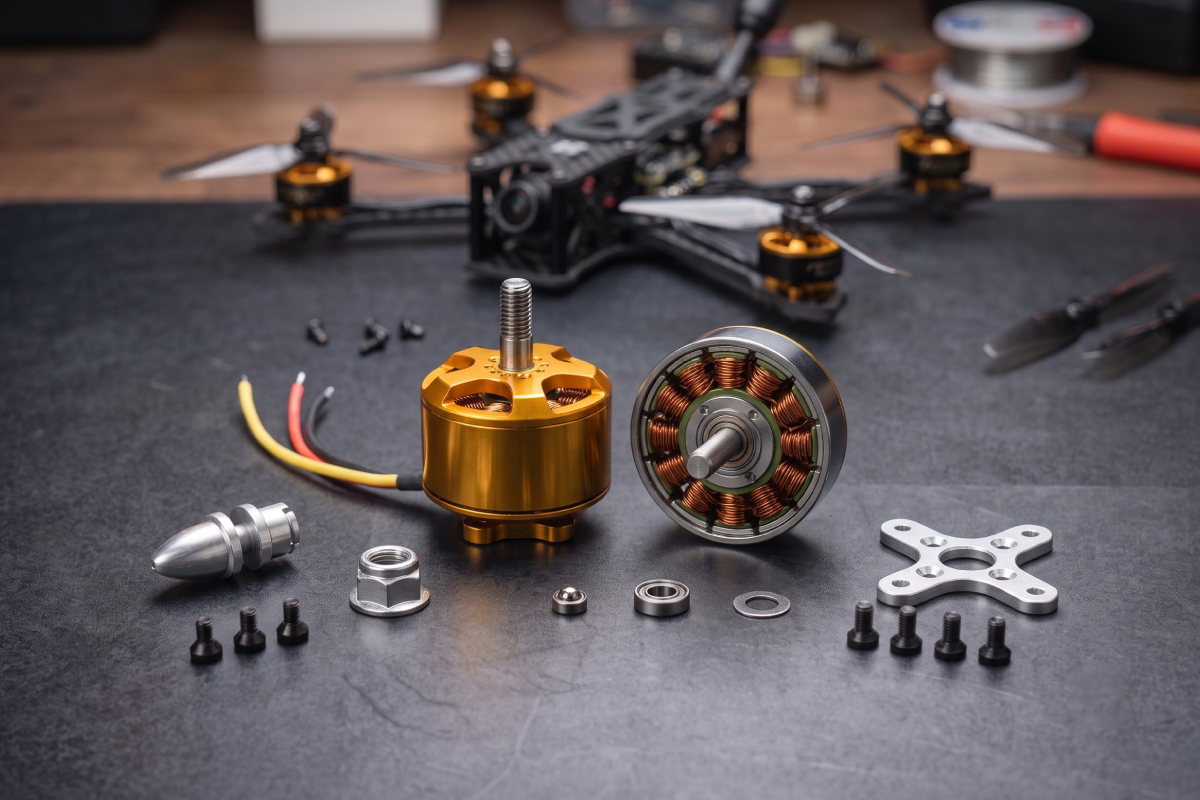
What Does KV Mean on a Motor?
The question of what KV means on a motor is as follows: KV denotes the speed at which the rotor will rotate when the voltage is applied. A 2300KV motor with a 4S battery of nominal voltage 14.8 V has the following potential:
2300 × 14.8 = 34,040 RPM without load.
In flight, the actual values will be lower because the propeller creates resistance. Battery charge, temperature, drone weight, frame type, and ESC quality also play a role. Therefore, the KV of an electric drive should not be evaluated in isolation from the entire configuration.
How Motor KV Changes Flight Performance
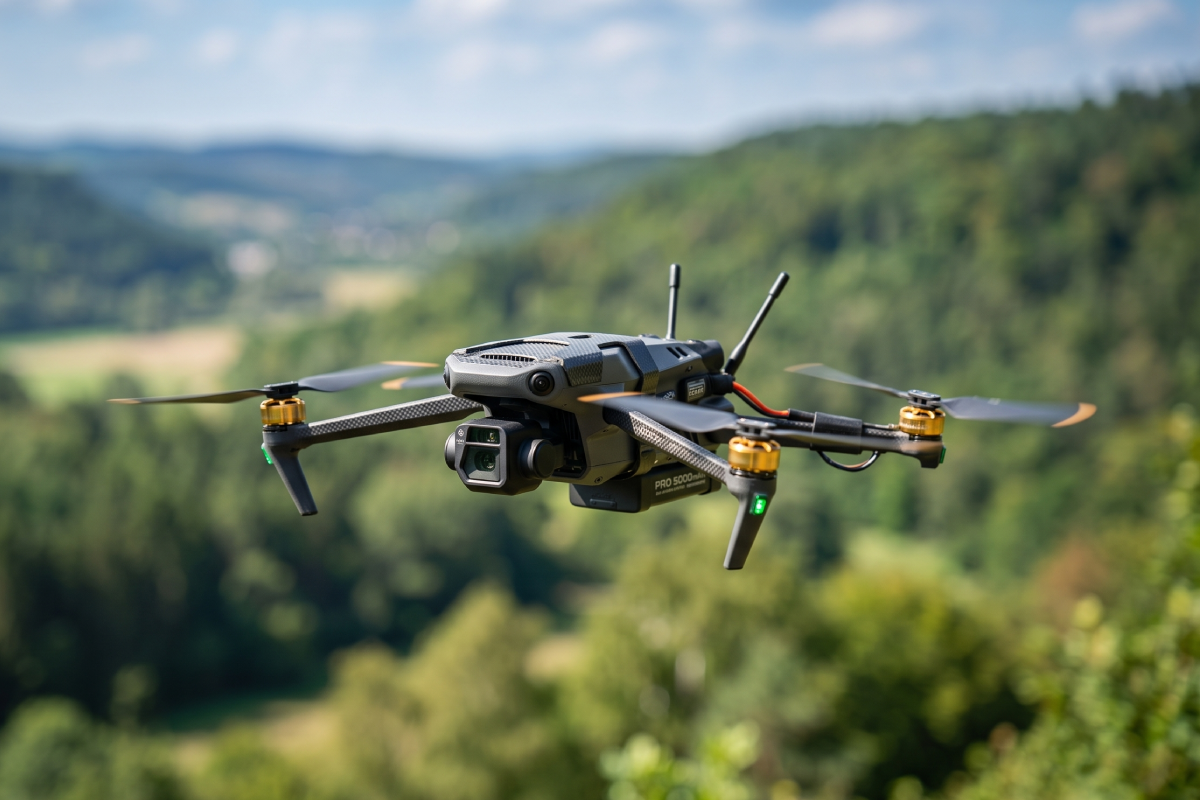 The electric motor's KV rating affects rotation speed, throttle response, heat, and power consumption. High KV typically provides higher RPM potential, but often requires smaller or lower-load propellers. Low KV is better suited to larger propellers or heavier platforms where consistent thrust is required.
- Higher KV can provide fast acceleration and sharp control response.
- Lower KV often works better with heavier loads and longer propellers.
- A large propeller on a high-KV unit can increase current and temperature.
- Battery voltage directly affects potential RPMs.
- Efficiency depends not only on KV but also on the stator size, magnets, and construction.
For example, the iFlight XING2 2207 2755KV is suitable for active FPV setups where fast response is important. The GEPRC SPEEDX2 2107.5 1960KV is a balanced option for 6S freestyle builds. The BrotherHobby Avenger V3 2806.5 1300KV may be appropriate for larger propellers or heavier platforms.
High KV vs Low KV Motors: Practical Comparison
When comparing KV motors, it is important to consider not only the KV rating but also the drone format, voltage, and propellers. Higher KV ratings are more often used in compact high-speed builds, while lower values may be more effective for larger propellers and smoother flight.
|
Factor |
High KV Motor |
Low KV Motor |
|
RPM |
Higher |
Lower |
|
Throttle Response |
Faster |
Smoother |
|
Best Uses |
Aggressive FPV, Compact Propellers |
Heavier Builds, Larger Propellers |
|
Load |
Requires Current Control |
Often Handles Larger Propeller Better |
|
Example |
iFlight XING2 2207 2755KV |
BrotherHobby Avenger V3 2806.5 1300KV |
You can find compatible components at a drone store; check not only the KV but also the recommended voltage, propeller size, and current KV rating of the brushless motor.
Battery Voltage and KV Rating of the Brushless Motor
The battery voltage determines the number of revolutions a drive unit can reach. The basic formula for calculation is:
KV × voltage = approximate RPM without load.
With the same motor, a higher battery voltage will increase RPM. This is the reason why a motor that performs well with 4S may overheat or overload the ESC on 6S without changing anything else.
When choosing a KV rc motor rating, you need to consider the battery's full-voltage rating, not just the nominal value. For 4S, this is up to 16.8V, and for 6S, it is up to 25.2V.
Matching Motor KV With Propeller Size
The brushless KV parameter is closely related to the choice of propeller. The propeller's size and pitch create a load on the drive unit. A large propeller at a high KV can draw excessive current, overheating the power unit and straining the ESC.
Signs that the KV and propeller are poorly matched:
- The unit heats up quickly after a short flight.
- The ESC becomes hot or reduces power.
- The battery discharges too quickly.
- Throttle control becomes sharp or unstable.
- Flight time is noticeably reduced.
- The drone behaves unstably under load.
- The current exceeds the recommended values.
BrotherHobby Avenger V3 2806.5 1300KV is better suited to larger propellers and loaded configurations. iFlight XING2 2207 2755KV, on the other hand, is better combined with smaller and lighter propellers to avoid excessive heating.
Mistakes When Choosing a KV Brushless Motor Rating
One of the most common mistakes is to choose a motor only according to the principle of “the more KV, the better”. In fact, the KV brushless motor rating is just one parameter. No less important are the stator size, design, type of magnets, efficiency, permissible current, and purpose of the KV electric motor.
Also, users sometimes ignore battery voltage, use a propeller that is too large, or fail to check the ESC limits. BrotherHobby Avenger V3 2507 1850KV and GEPRC SPEEDX2 2107.5 1960KV have similar KV ratings but may differ in behavior due to differences in stator size and manufacturer design.
It is advisable to review the technical information on brushless motors before purchase and compare it with the parameters of the frame, battery, propellers, and speed controller.
Final Thoughts on Brushless Motors KV Rating
The brushless motors KV rating helps predict the potential speed of the motor, but does not determine the quality of the motor by itself. It should be considered alongside the battery voltage, propeller size, stator parameters, ESC capabilities, and the purpose of the build. The correctly selected KV provides stable thrust, controlled temperatures, and more efficient energy use. Choose the right power unit based on the characteristics of the entire system, not just the number on the body.
FAQ
What does KV mean on a brushless motor?
KV means the number of theoretical revolutions per minute per volt of voltage without load. For example, a 2000KV motor can reach about 20,000 RPM at 10 V.
Is a higher KV brushless motor always better?
No. It can give faster RPMs, but also increase current draw and heat. The best choice depends on the battery, propeller, and build type.
How do I calculate motor RPM from the KV rating?
Multiply KV by battery voltage. For example, 1900KV x 22.2V equals approximately 42,180 RPM without load.
What KV motor is best for FPV drones?
There is no one-size-fits-all value for FPV. Motors used for 5-inch 6S freestyle drones have a lower KV than 4S versions, but it all comes down to the propellers and flight style.
Can the wrong KV rating damage my build?
Yes, combined with a battery and propeller, it can cause the motors to overheat, overload the ESC, drain the battery quickly, or cause the drone to operate unstably.