
Best FPV and Receiver Placement for Better Signal Quality
Posted by Roman on 4th Aug 2026
Many drone problems are not caused by bad hardware. In many cases, the issue is drone antenna placement. When aerials are placed poorly, you may get weak signal, unstable video, or limited range. The position of the antenna affects signal strength, video stability, and the system's ability to handle interference. This applies to both FPV video systems and the control link. On compact builds with a carbon fiber frame, space is tight, so correct placement becomes even more important.

Why Proper Positioning Matters
Good drone antenna placement makes your drone more reliable in the air. Poor placement can reduce performance even if your components are high quality.
Common problems include:
- reduced control range
- weak or unstable video signal
- poor alignment
- signal blocked by frame parts or battery
- unstable control link
Carbon fiber and onboard electronics can interfere with signals. That’s why it’s important to place aerials where they have a clear line of sight. Proper positioning improves both the control link and overall flight stability.
Main Factors That Affect Drone Antenna Position
There is no single perfect setup. A good drone antenna position depends on a few simple things, and they all work together. First, aerials should not sit too close to the carbon fiber frame, because the material can weaken the signal. It’s also important to keep some distance from ESCs, motors, and power wires, since these parts can create noise and reduce signal strength.
At the same time, antennas perform best when they have exposure to open air and are not blocked by the frame or battery. The aerial angle also matters and should match how the drone typically flies, not just how it looks when standing still. Another key point is the relationship between the transmitter and receiver antennas, as proper alignment helps maintain a stable connection.
Finally, while aerial protection is important, it should not come at the cost of performance. Covering or hiding the antenna too much can hurt the signal. In simple terms, aerial placement is always a balance between protection and performance to get the best range and stable link.
Best FPV Setup for Stable Video Signal
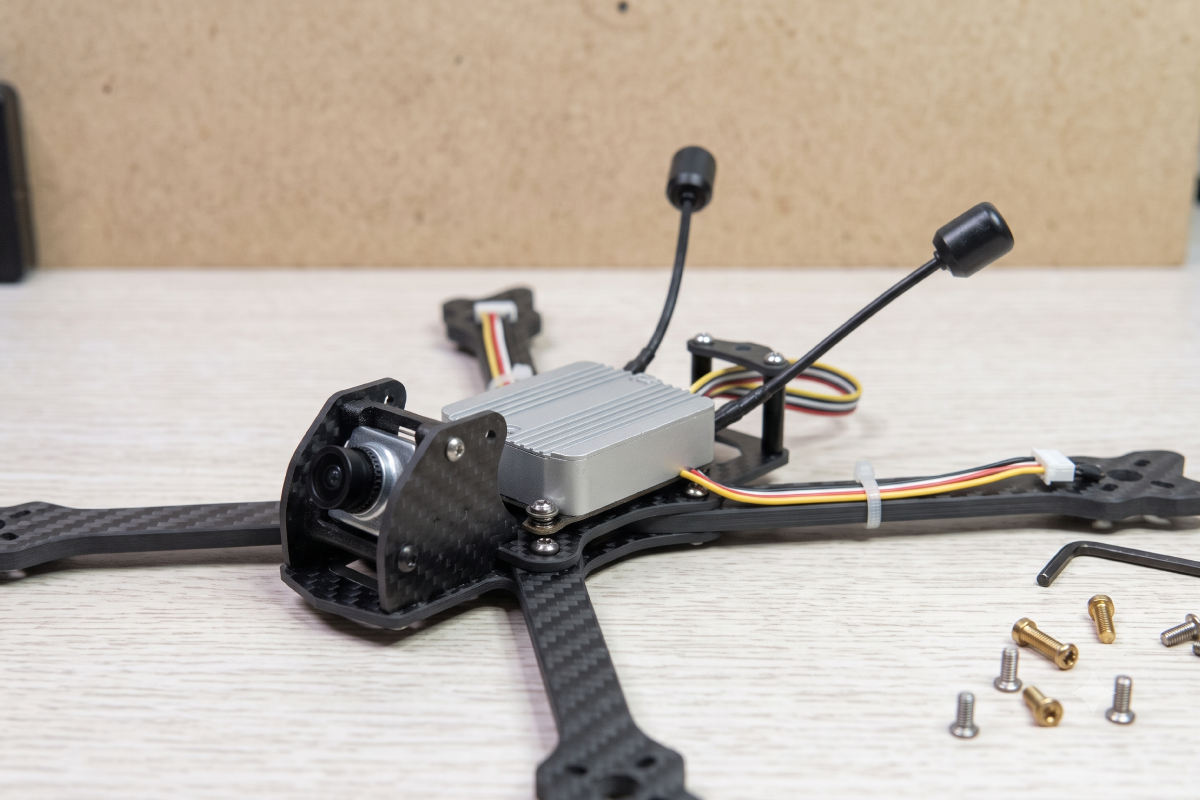
Good FPV antenna placement has a direct effect on how clear and stable your video looks in the air. Even with a strong video transmitter, poor positioning can lead to breakup or weak penetration behind obstacles. That’s why many pilots mount the VTX aerial at the rear or top-rear of the frame, where it has a clearer path.
The most important part is the antenna's active element. It should stay away from the carbon fiber frame and not be blocked by the battery or canopy. Placing it too close to carbon or hiding it inside the frame can quickly reduce video signal quality. At the same time, some level of protection is needed, but over-covering the antenna often does more harm than good.
Common FPV placement goals:
- clear signal path
- reduced interference
- lower chance of damage in a crash
A simple, slightly exposed setup usually performs better than a fully hidden one.
Receiver Setup for a Stable Control Link
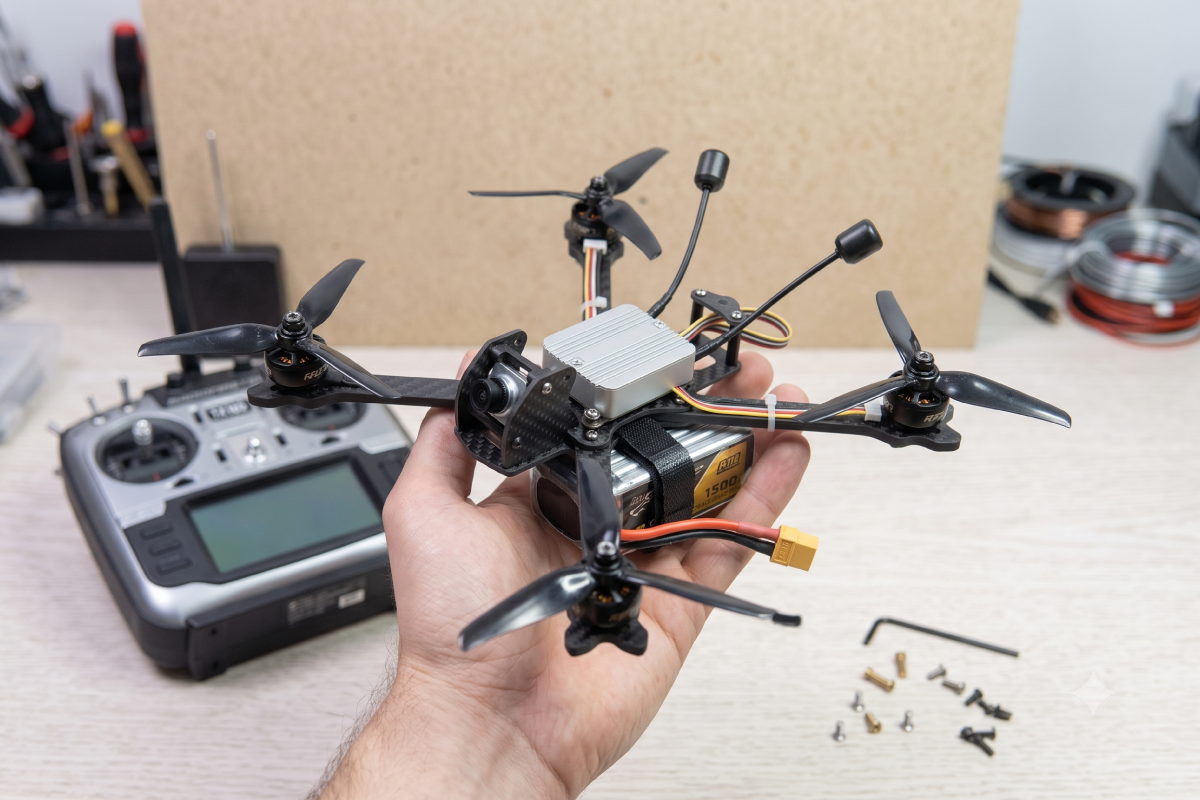
Correct placement of the drone receiver antenna is key to a stable control link. These aerials are responsible for keeping your drone connected to the radio, so even small mistakes can affect flight safety.
Receiver antennas should not be pressed tightly against carbon arms. This reduces their efficiency and can weaken the signal. Instead, they should have some aerial clearance and be placed in open space when possible. The antenna angle also matters, especially in a diversity receiver setup, where two antennas work together. Mounting them at different angles helps maintain better link quality in different positions during flight.
It’s also common to separate dual aerials rather than keep them close together. This improves reliability for systems like ExpressLRS, Crossfire, and similar RC system setups.
One more thing to avoid is bundling receiver antennas with FPV antennas without considering the layout. Each system works best when it has its own space and clean routing.
Best Signal Layout for Different FPV Builds
Different drones need slightly different approaches. The best radiating element orientation depends on how the drone is built and used.
Small FPV Drones
On small FPV drone builds, space is very limited. Here, careful antenna routing and basic antenna protection matter more than perfect placement. Antennas are often mounted close to the frame, so keeping them slightly exposed without risking damage is the main goal.
5-Inch Freestyle Drones
For freestyle builds, rear-mounted radiating elements are the most common choice. This setup keeps the antenna away from the battery and improves antenna clearance. It also helps with crash survivability, especially when using flexible mounts or radiating element tubes.
Long-Range Drones
A long-range drone prioritizes performance over looks. Antennas should have maximum exposure and a clean signal path. In this case, stable link quality, strong radio link, and minimal signal loss are more important than keeping everything compact.
Common Signal Setup Mistakes
Even well-built drones can have issues if drone antenna placement is not handled carefully. One common mistake is mounting radiating elements too close to the carbon fiber frame, which can weaken the signal. Another issue is bending or damaging the active element, something that often happens with small drone antennas during crashes or tight mounting.
Placing antennas behind the battery is also a bad idea, as it blocks both the video signal and the control link. In diversity setups, running both antennas in the same direction reduces performance instead of improving it. Radiating elements should also not be placed too close to high-current wires, since this can create unwanted interference.
A common problem is focusing too much on a clean build rather than on real signal performance. A neat layout may look good, but it doesn’t always deliver the best results in flight.
Comparison Table: Good vs Bad Antenna Placement
|
Placement Choice |
Effect on Signal |
|
Clear exposure away from the frame. |
Better range and cleaner link. |
|
Mounted directly against carbon. |
Higher signal loss risk. |
|
Receiver elements separated by angle. |
Better link consistency. |
|
Hidden behind the battery. |
More signal blocking. |
|
Too close to the power wiring. |
More interference risk. |
These examples show how small placement details can affect performance. Even simple changes, like adjusting the angle or slightly moving parts, can improve both control stability and video quality without upgrading your drone receivers.
How to Improve Drone Antenna Placement Without Rebuilding the Whole Quad
You don’t need a full rebuild to fix drone antenna placement. Small changes can make a real difference. Start by moving the radiating element slightly outside the frame to give it more open space. Adjust the antenna angle to match how the drone flies most of the time. It also helps to separate the video and receiver antennas instead of keeping them too close together.
If needed, add a simple mount or radiating element tube for better positioning and basic protection. Check that the active part of the antenna is not blocked or hidden. Before buying new parts or deciding to buy drones, it’s worth testing a few placement changes first. Even small tweaks can improve signal strength and stability without extra cost.
What to Check Before Final Installation
Before locking in your final drone antenna position, take a moment to check a few key things. Make sure the radiating element has enough protection against crashes while still maintaining a clear signal path. Think about how the antenna orientation will work during actual flight, not just on the bench.
Battery position also matters, since it can block the signal if placed in front of the antenna. The type of carbon fiber frame and overall layout can affect performance, too. If you’re upgrading parts from a drone store, check that everything fits well together. Most importantly, secure the radiating element properly without bending or crushing it. The best setup is not always the cleanest-looking one, but the one that works reliably.
Frequently Asked Questions (FAQ)
What is the best setup for signal performance?
The best drone antenna placement keeps the active element away from the carbon fiber frame, wiring, and battery, while still offering light protection.
Does positioning affect signal range?
Yes, even small mistakes can reduce signal strength, shorten range, and cause unstable video.
Where should FPV components be mounted?
For most builds, FPV antenna placement works best at the rear or top-rear, with the active part in open air.
What is the best receiver layout for stable control?
Good drone receiver antenna placement means spacing antennas apart with clear angles for better link quality.
Should drone antennas point in the same direction?
Not always. Different angles often give a more stable connection.