
3-Inch vs 5-Inch vs 7-Inch FPV Drone Builds: What Size Should You Build?
Posted by Roman on 29th Jul 2026
Choosing an FPV drone is not just a matter of size. FPV drone sizes determine the speed, stability, flight duration, range, weight of the structure, cost of components, and even the feeling of control. While the 3-, 5-, and 7-inch models work on the same concept, each of them is intended to be used for a specific type of flying. In this guide, we will compare the most common options and help you choose the optimal drone FPV setup.
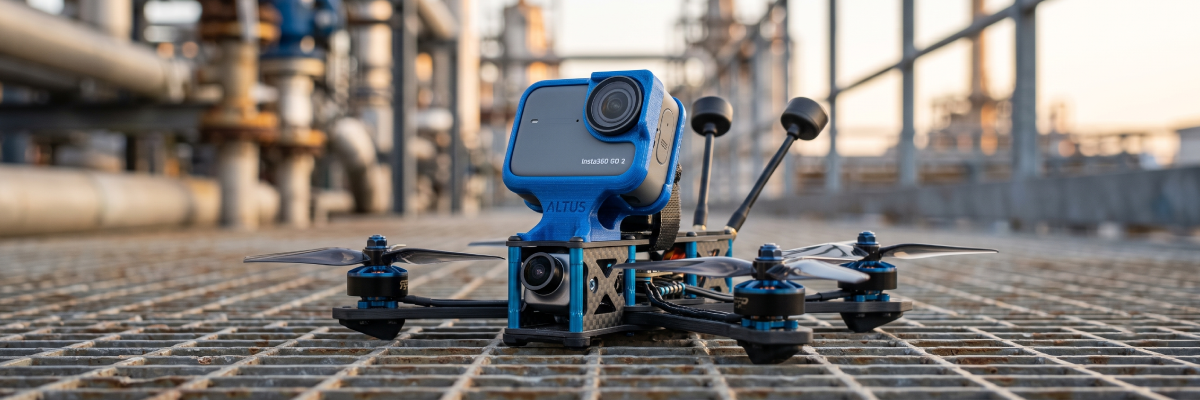
FPV Drone Sizes Explained: Why Drone Size Matters for Flight Performance
The concept of the size of a drone includes not only the diameter of the propellers. It determines the choice of the frame, motors, battery, ESC, total weight, and behavior of the quadcopter in the air. That is why the right size is the basis of a successful assembly.
For universal 5-inch models, a popular platform is the TBS Source One V5, while the Mark4 7-Inch Frame is often used for long-range flights. If you need a small FPV drone, manufacturers offer lightweight 3-inch frames that combine mobility and good controllability.
In addition, the drone's dimensions affect crash resistance after falls, flight efficiency, and the choice of launch site.
A successful FPV drone starts with the right choice of size, and only then with the selection of components.
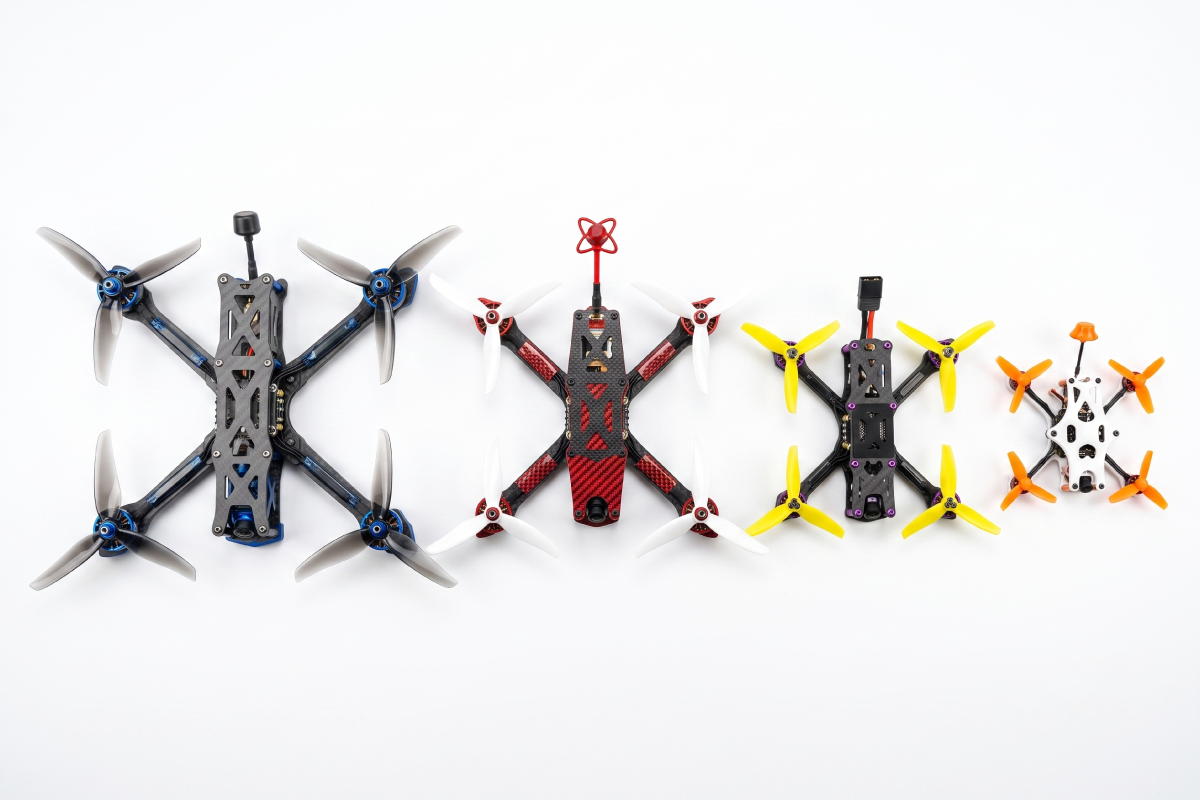
FPV Drone Size Comparison Chart: 3-Inch vs 5-Inch vs 7-Inch Drones
When comparing different sizes of drones, there are advantages to each type. There are compact 3-inch drones, versatile 5-inch drones, and 7-inch drones with optimal range and steady flying.
For compact builds, a lightweight 3-inch frame, HQProp T3.5X2.2 propellers and 1404–1507-class motors are often used. The traditional 5 inch setup consists of the TBS Source One V5, 2207 motors, three-blade propellers, and 4S or 6S batteries. For long-range flights, the Mark4 7 Inch Frame, HQProp J75 (7X5X3) propellers, BrotherHobby Avenger V3 2806.5
|
Drone Size |
Best For |
Main Benefit |
Possible Drawback |
|
3-inch FPV drone |
Small spaces, travel |
Compact and agile |
Less stable in wind |
|
5-inch FPV drone |
Freestyle, racing |
Balanced performance |
Slightly larger for transport |
|
7-inch FPV drone |
Long-range, cinematic |
Long flight time |
Higher cost and maintenance |
3-Inch FPV Drones: Compact and Agile
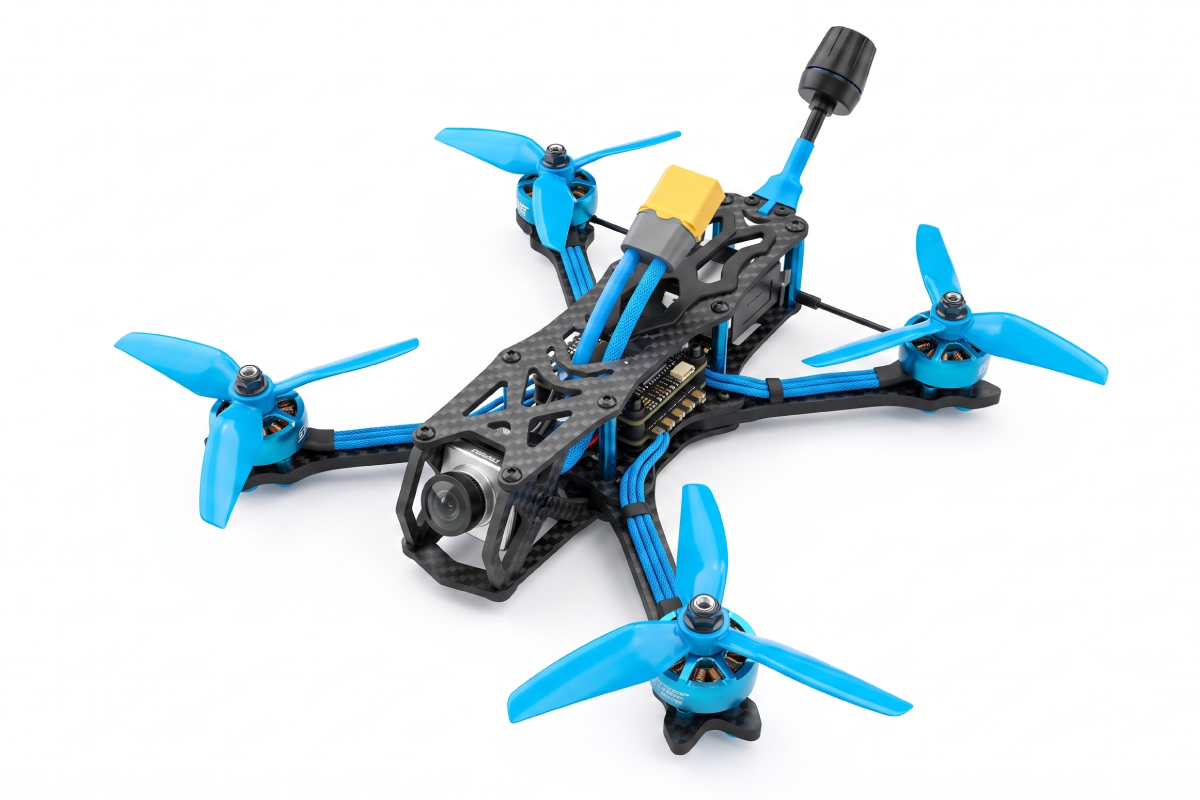
3-inch FPV drones will be an excellent choice for pilots looking for a lightweight and compact platform. Because they are lightweight, they are convenient to transport and also feel good in small parks, yards, or other limited locations.
A typical assembly consists of a lightweight 3-inch frame, 1404–1507 motors, and HQProp T3.5X2.2 propellers. This combination provides quick response to control and sufficient thrust for everyday freestyle and training flights.
Advantages of the 3-inch platform include compactness, lightweight, easy transportation, suitable for small areas, and less energy consumption.
If you are interested in how small can a drone be, this format is one of the best compromises between performance and mobility. For comfortable control, you should also choose high-quality FPV Goggles that will help you get maximum pleasure from the flight.
5-Inch FPV Drones: Best Racing FPV Drone for Freestyle and Everyday Flying
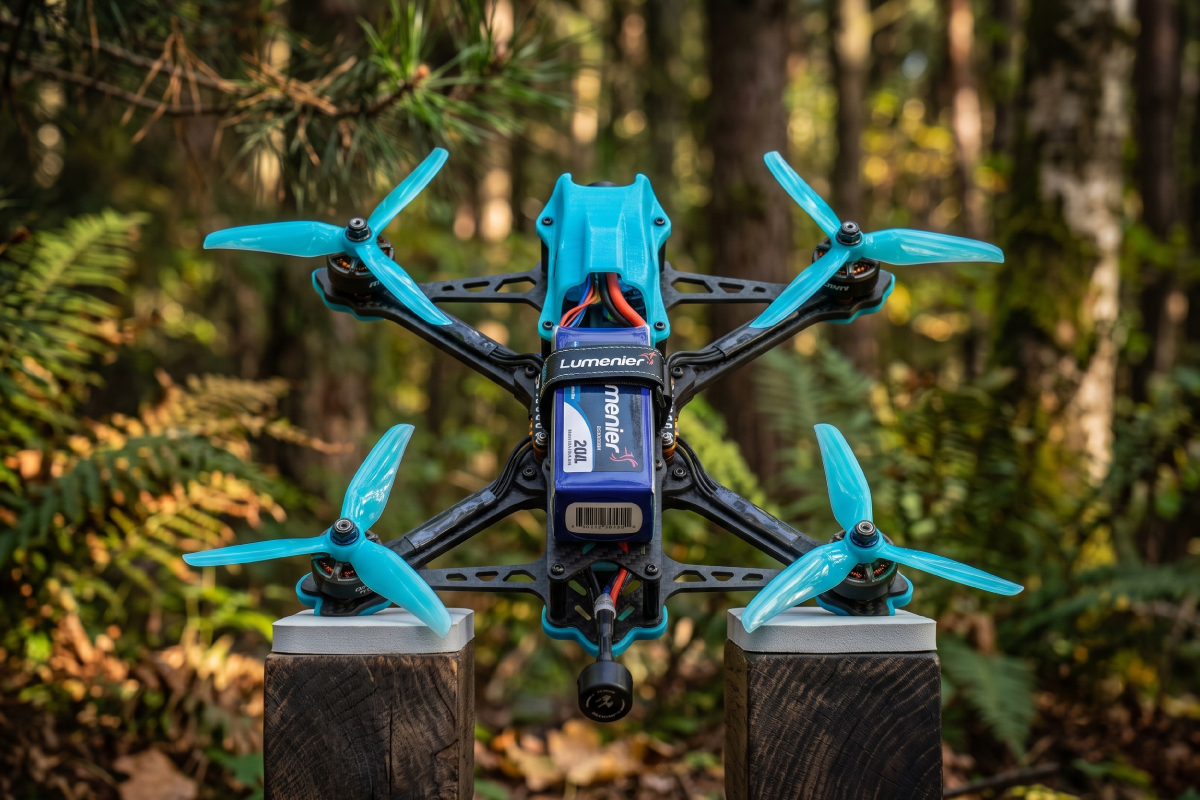
A 5-inch FPV drone is widely considered a universal solution. It is equally well suited for freestyle, racing, and most everyday flying, providing a good balance between power, controllability, and durability.
Most often, such a build is based on the TBS Source One V5, iFlight XING2 2207 motors, HQProp three-blade 5-inch propellers, and 4S or 6S batteries. Thanks to a large number of compatible parts, upgrades and repairs are not difficult.
Why 5-Inch Builds Are Popular
The popularity of 5-inch models is explained by the huge selection of components and the ability to adapt the build to different tasks. They are powerful enough for aggressive freestyle, but at the same time remain comfortable for most pilots.
Main advantages:
- Strong power-to-weight ratio.
- Good freestyle performance.
- Wide parts availability.
- Suitable for racing and general FPV.
- Can carry an action camera.
- Stable enough for outdoor flying.
That is why many pilots consider this format to be the best compromise between price, performance, and capabilities, as well as one of the candidates for the title of best racing FPV drone.
7-Inch FPV Drones: Built for Range and Stability
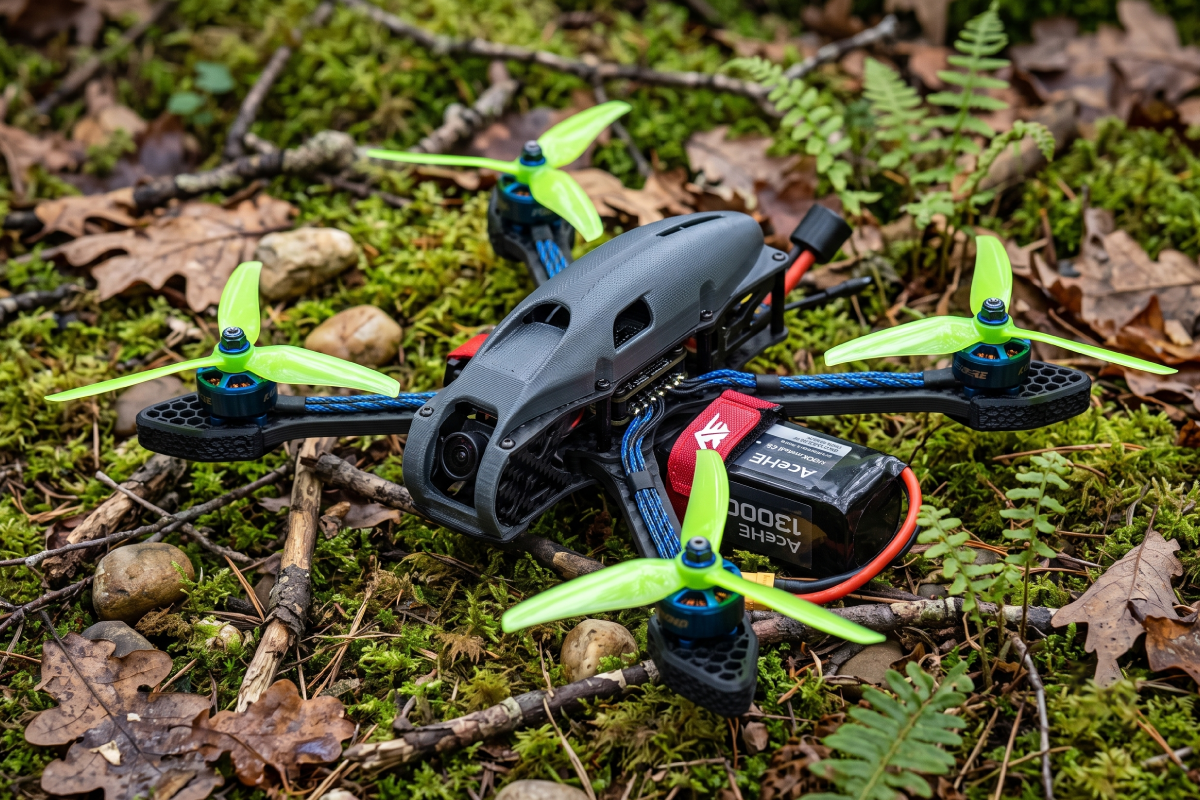
These drones have been designed with smooth flight and maximum efficiency in mind. Due to the fact that the drones have larger propellers, they work at lower speeds, hence saving on power and maximizing flying time. This makes them ideal for long-range flying.
A typical example is the Mark4 7-Inch Frame combined with HQProp J75 (7X5X3) propellers, BrotherHobby Avenger V3 2806.5 1300KV motors, and large batteries. This configuration provides stability even in windy weather and allows for the installation of additional equipment.
But the 7-inch models need more space, precise installation, and are costlier to maintain. Due to their weight and inertia, they are not the best choice for rough freestyles but are excellent for smooth tracks.
How to Choose the Right FPV Drone Size
Choosing the right size of drone depends on your flying style, budget, and experience. There is no one-size-fits-all option.
Before buying, consider:
- where you will be flying;
- your style (freestyle, racing, cinematic, or long-range);
- desired flight time;
- battery cost;
- propeller size;
- motor and ESC compatibility;
- portability;
- safety regulations in your location.
Understanding these factors will help you interpret the drone size chart correctly and avoid bad purchases.
Best FPV Drone Size by Flying Style
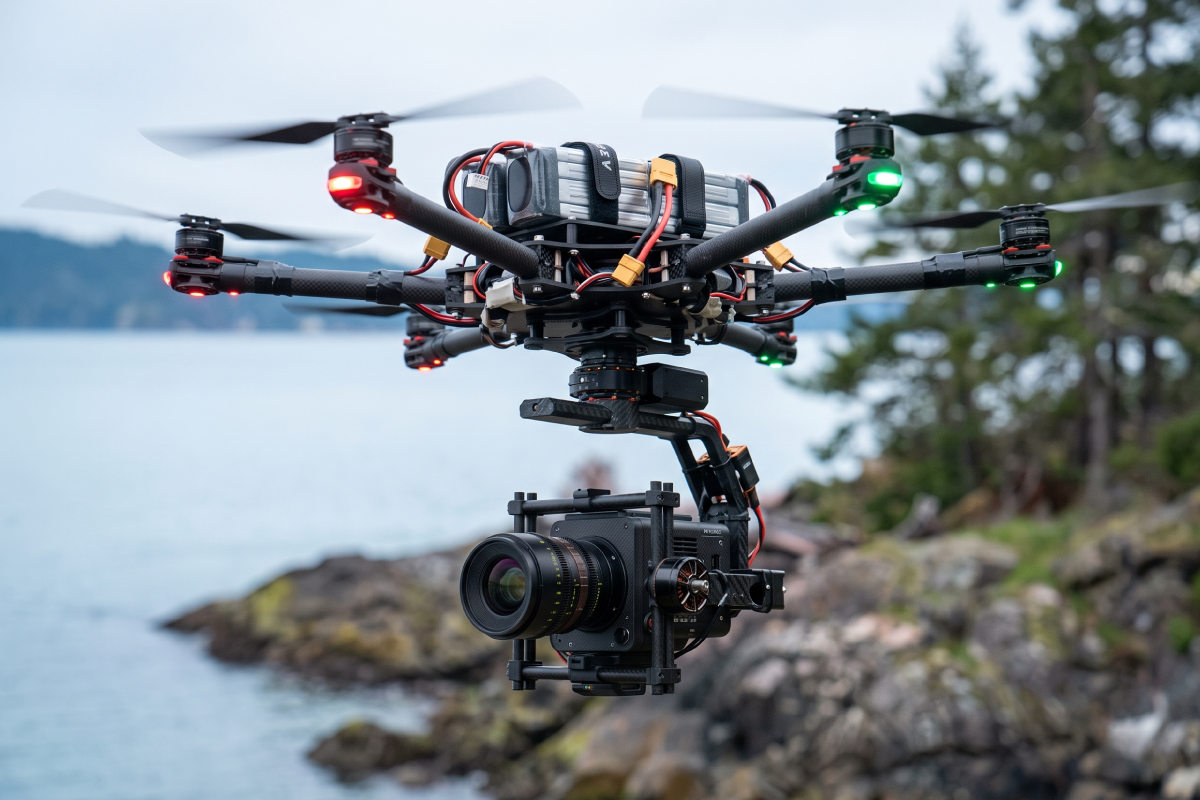
Different flight styles require different platforms:
- Racing — 5-inch
- Freestyle — 5-inch or light 3-inch
- Cinematic flights — 7-inch
- Long-range cruising — 7-inch
- Beginner practice — 3-inch or 5-inch
- Travel setups — 3-inch
This approach helps you to quickly understand which quadcopter size chart suits your tasks. In the Drones catalog, you can find both ready-made solutions and components for any level of training.
Common Mistakes in FPV Drone Size Selection
One of the most common mistakes made is choosing a drone that is too big from the very beginning. For instance, a beginner might choose the Mark4 7-Inch Frame drone without considering the complicated process of assembling it and the expensive components used in it. It is also important to consider the FPV drone weight class, as a heavier build usually requires more space, stronger components, and greater attention to safety.
For the first build, the TBS Source One V5 is much more practical, as it is easier to repair and has affordable components. This allows you to reduce costs during training.
Other mistakes include choosing only by speed, ignoring the cost of batteries, underestimating the cost of propellers, choosing a drone without taking into account the place of flights, and not having a spare budget for repairs.
Large quadcopter sizes almost always mean more expensive operation, so it is important to choose a kit for real tasks, and not just for characteristics.
FAQ
What is the best FPV drone size for beginners?
Beginners should choose 3-inch or 5-inch drones. They are easier to control and cheaper to repair.
Is a 3-inch FPV drone good for freestyle?
Yes, this size is good for training and light freestyle.
Why are 5-inch models so popular?
They offer a strong balance between power, maneuverability, and availability of spare parts.
Are 7-inch models good for racing?
No, due to their size and inertia, they are less suitable for racing.
How small can an FPV drone be?
There are even smaller micro drones, but 3-inch models remain the most practical compact option.
What size is best for long-range flying?
7-inch FPV drones are the best choice for long-range due to their efficiency and stability.